The missions of the Italian Jesuit provinces
What and how many missions did the historic Italian provinces have? Where were they located?
Today’s episode is not exhaustive on the subject: sometimes the provinces held certain missions only for a short period, before these were transferred to neighbouring provinces, or due to historical events. We will speak exclusively of the missions of the New Society. For the Old Society, unfortunately, our archives hold no documentation.
Characteristics of the mission
The Society of Jesus, like other religious orders, divides the world into specific territories called Provinces to better administer houses, works and Jesuits.
At the head of each Province is a Provincial who remains in constant contact with the General. The missions were under the jurisdiction of a specific Province.
However, we must not assume that a vast territory, such as China, was under the jurisdiction of a single Province. In fact, several Italian and European Provinces had their own missions in different parts of China.
Over time, particularly from the 1960s onwards, the missions first became vice-provinces and then provinces of the Society, entirely independent of their European or Western ‘mother provinces’.
The Apostolic Nuncio
It must never be forgotten that in the mission territories, various religious orders—both male and female—coexisted, maintaining contact with the Holy See through the Apostolic Nuncio, appointed by the Pope.
This figure served as a key point of reference for both the local diocesan clergy and the various religious orders, and often received reports or requests for funding which he forwarded to the Holy See.
The archive produced by the Nunciature is now held in the Vatican Apostolic Archives, where documents from all the nunciatures are periodically deposited. For this reason, when researching the missions of the Italian provinces of the Society of Jesus, in addition to our own archive, it is necessary to consult the Vatican Apostolic Archives as well.
Archives of the Society
Precisely because the mission territories have become provinces, it is not feasible to limit research solely to our archive. Archival sources produced by houses and colleges, such as the Superior’s correspondence, house diaries, the personal papers of deceased Jesuits and school registers, are not found in our archive but in that of the province which now exists in the former mission sites. It will therefore always be essential to contact the historical archives of the local provinces as well. Indeed, many of these now have a historical archive open to researchers; we cite, by way of example, that of Madurai.
It is essential to consult the ARSI, the central archive of the Society of Jesus. This archive holds the correspondence between the General Superiors and the Provincial Superiors, a second copy of the historiae domus, and various types of information on the missions, including material dating back to the Old Society.
A Jesuit setting out for the missions does so of his own volition and requests to depart; in the past, this request was made in writing, known as the indipeta.
We must not assume that a Jesuit from the Sicilian Province could be assigned solely and exclusively to the province’s own missions. Fr. Cataldo, for example, was a Jesuit from the Sicilian Province yet set off for the Rocky Mountains. The General asked the various Provincials for the Jesuits needed in specific locations, based on their talents and training.
Let us therefore discover which missions were under the jurisdiction of the five historic Italian provinces.
Veneto-Milanese Province
Although Albania was an integral part of the province, it was initially considered one of its missions. In fact, apart from the residence in Shkodër, the rest of the country was part of the so-called ‘flying mission’. For six months of the year, the Jesuits devoted themselves to preaching and evangelisation in the various Albanian villages, in the mountains and in the most remote areas. This is why the mission was called ‘flying’, as the priests and brothers were scattered everywhere.
A little further north lay the so-called “Illyrian–Dalmatian” mission: the Jesuits lived in the residence at Ragusa (now Dubrovnik) and in the colleges at Split, Zadar and Rijeka. We often think of missions as being very far away, but these examples show us that in reality they were also in neighbouring regions such as the Balkans.
Among the missions of the Veneto-Milanese Province, one of the largest and most distant was that in India, in Mangalore and Kerala. Here were located: the college dedicated to St Louis Gonzaga in Mangalore, and the residences in Tellicherry, Calcutta, Kannur and Madurai. The Province also had a mission in Ceylon, in Kandy, and one in West Bengal.
Leafing through the catalogues, we can see the opening of the various residences, how Jesuits as the years increasingly populated them went by.
Turinese Province
The missionaries of the Turin Province, on the other hand, were sent, for most of the nineteenth century, both to the Rocky Mountains – which span several US states – and to Alaska.
In the harsh lands of Alaska, there were active residences in Kalispell and Colville, as well as in Nulato. These are the names found in historical catalogues and sources; today, in many cases, they have changed. In the Rocky Mountains, there were residences and colleges in Spokane, Montana, Idaho and Oregon.
The Province also had a mission in California, where we find: St Ignatius College in San Francisco, the college in Santa Clara, and those in San José and Los Gatos.
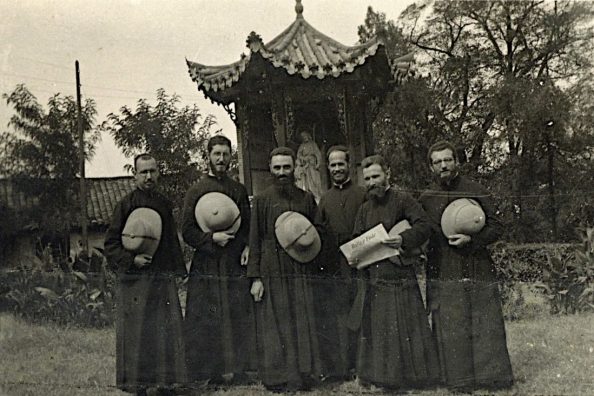
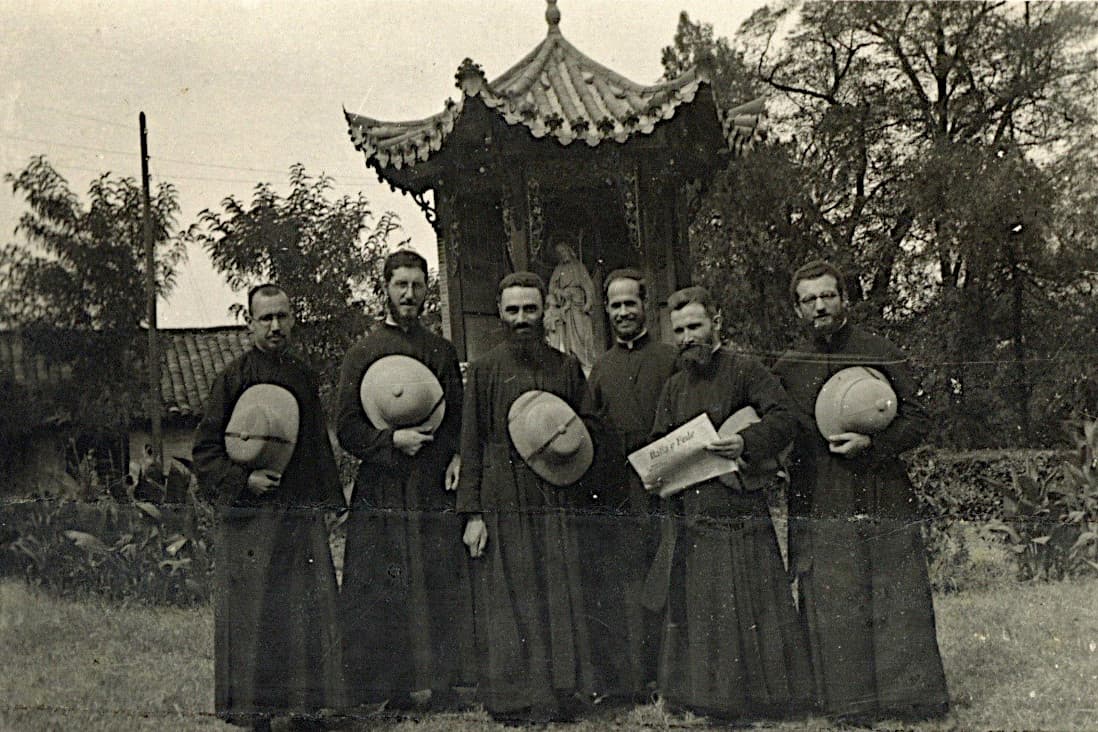
The Turinese Province, together with the Roman Province, had its own mission in China, in the Chinese province of Anhui, at Peng-Pu, now known as Beng Pu in the present-day Anhui Prefecture. Here the Jesuits ran a school and a seminary, and were engaged in missionary work in various towns, often-small ones, which are listed in the catalogues.
Roman Province
The missions under the Roman Province were located in very different parts of the world. In the East, we find the one already mentioned, in China, at Peng-Pu. In a different prefecture and on the coast, but still in eastern China, lies Shanghai, part of the Roman Province’s mission.
It was the that Fr. Vincenzo Marchi was sent before passing away in Shanghai in 1912, a few years before the arrival of Fr Bortone who, on the other hand, had to return to Italy. Fr. Delmirani also dreamt of China, but he never became a missionary.
Towards the end of the nineteenth century, some Jesuits from the Roman Province were sent to Syria; however, this was not a mission of this province but of one of the historic French provinces.
Moving westwards from Italy, the Roman Province had, since the mid-19th century, a mission in Brazil where, over time, the following were active: the college in Itu and Nova Friburgo, the residence in Pernambuco, the residence of the Most Sacred Heart in Itajaí, in Rio de Janeiro and one in Nova Trento.
Neapolitan Province
In the 19th century, the missionaries of the Napoletana were sent mainly to America. Indeed, the mission covered the states of New Mexico and Colorado, where colleges and residences were active in Albuquerque, La Junta, Las Vegas and Guadalupe; we still have the *historie domus* and correspondence relating to these. Later, however, the Province also had a mission in Sri Lanka, formerly known as Ceylon, and in particular in the city of Galle, where missionaries were still sent as late as the 1960s.
Sicilian Province
The Sicilian Province, on the other hand, had two very small missions, on the islands of Syros and Tinos in the Aegean Sea, as well as a mission further east, in Constantinople, where it ran the college of Saint Pulcheria. Over time, a residence was also opened in Athens as part of the Greek mission. Many of the Jesuits assigned to these missions were Maltese.
Maltese Province
Malta was an integral part of the Sicilian Province and became an autonomous province in 1947, at a time when missions were beginning the process of separating from the provinces to become vice-provinces and then independent missions. The vocation of a great many Maltese, however, was precisely the mission. Most were sent to India or Sri Lanka, others to various countries in Africa.
Many of the Jesuits currently living in Malta are still attached to the provinces of India.
Printed sources
There are numerous printed sources available for anyone wishing to study the missions. Let us begin with the historical catalogue, which can be consulted online on the ARSI website, where we can see when the mission first began to be mentioned in a particular province, the Jesuits who were gradually assigned there, and their roles.
Each province then published its own ‘Edifying Letters’: correspondence written by the missionaries to the provincial superior to recount daily life in the missions, the difficulties in carrying out the apostolate, and to describe the mission. The letters were published annually, and at the end of the volume, one often finds the obituaries of the missionaries.
In the 1930s and 1940s, the Provinces began publishing their own magazines featuring in-depth profiles of missionaries, articles dedicated to their departure or their lives.
There was a magazine entirely dedicated to the subject: “Le missioni”, run by the Veneto–Milan Province, which later adopted the name “Popoli e missioni” and finally “Popoli”.
In some cases, the missions also published their own bulletins. In our study room, we have records of the Pengpu mission – now Bengbu in Anhui Province, China – dating from 1924 to 1950.
Today, the provinces no longer have missions, as those territories have, over time, become vice-provinces and then independent provinces – a process also facilitated by decolonisation and local vocations. Indeed, missionaries did not always manage to learn the local language, and the presence of European clergy often led to linguistic and cultural imbalances, as the religious preferred to communicate in English or French, the languages of the colonisers.
Currently, organisations such as Magis are involved in local development projects in various countries across Asia, Africa and South America, working alongside the offices of the local provinces.
Maria Macchi