Other holdings
Personal holdings
The archive holds the personal funds of a number of Jesuits.
On this page, we highlight the archival collections – some larger, some smaller, but all ‘independent’ of the provincial collections – held on behalf of certain priests and brothers. However, personal papers can also be found within the provincial collections.
Every Jesuit produces documents throughout his religious life: homilies, spiritual notes and letters.
In the past, however, the Society of Jesus had no guidelines regarding the archival preservation of the personal papers of the deceased.
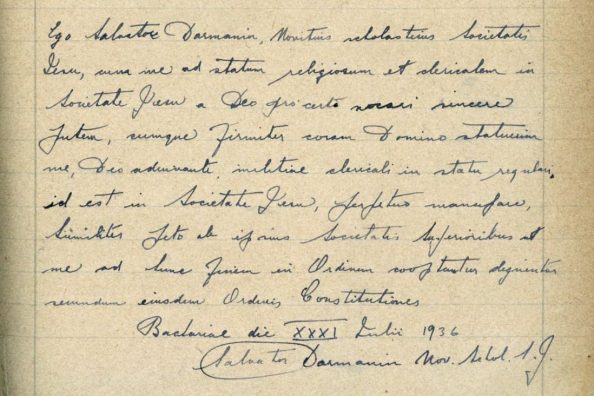
Whilst the personal file – containing official documentation on the Jesuit such as vows, diplomas, certificates, letters of appointment from the Provincial, and a few photographs – is always preserved in the Provincial Collection as it was kept in the offices of the Curia, personal papers met a different fate.
Often, what was found in the room of a deceased Jesuit was considered of little importance and not worth preserving. In the past, the papers of Jesuits who were already ‘famous’ at the time of their death were kept. This is why, for example, we have Lorenzo Rocci’s diary. A reputation for holiness also contributed to the preservation of a deceased person’s documents in view of a possible canonical process. In other cases, personal papers were often destroyed.
To give an idea of the extent of this gap, consider that the Roman Province’s archives contain the personal files of around 3,000 Jesuits, yet we have personal writings for only 90 of them. This criterion has contributed to fuelling certain misconceptions: many researchers believe, for example, that the lay brothers did not produce any documentation.
It should also be borne in mind that every Jesuit is a document producer and, whilst alive, has control over his own papers. Frequent transfers may have led, in the past, to the loss of documentation, due to changes of community and the decision to destroy papers that were no longer useful. For the majority of deceased Jesuits, therefore, not the entire body of papers produced during their lifetime has been preserved, but only a part. Sometimes, in the case of a small number of papers – a diary, a few letters – these can be found in the personal file; in other cases, where the volume was greater, the documents have been preserved in a specific series within the provincial archive.
There is a ‘personal writings’ series for each historic Italian province. It is worth noting that, in the case of the Sicilian province, approximately two linear metres of papers produced by the brothers are preserved.
Today, there is a different approach to the papers of deceased members that regularly arrive at our historical archive.
Finally, we would like to point out that for those who have left the Order, only the personal file remains, whilst they took any personal papers with them when they chose to leave the Order.
The situation was different for Jesuit missionaries who were assigned to another Province; their documents were often filed or transcribed. Upon their death, the documents remained in the local area and were transferred to the historical archive of the Province of which they had become members, rather than to their Province of origin.
St. Francis De Geronimo
The papers attributed to the saint constitute one of the very rare examples of documents produced within the Ancient Society and held in our historical archive. They have historically been preserved within the collection of the Neapolitan Province, but form a separate body of documents. The collection comprises 125 writings, including notes for spiritual exercises, sermons and homilies by St Francis de Geronimo, produced between 1690 and 1710; most of the documents are undated. The Jesuit often reused letters or parts of letters addressed to him to take notes; it is therefore also possible, in some cases, to ascertain the content of the messages he received.
Fr Raffaele Garrucci
The Garrucci collection preserves the documents produced by the Jesuit during his religious life for his studies in archaeology, numismatics, art history and epigraphy, as well as those used for the publication of his works.
The collection contains around 3,000 letters received by the Jesuit from numerous correspondents, as well as personal documents (photographs, expense reports, certificates, poems) and working documents, including: diaries, notebooks with notes, drawings, working sheets and drafts of his books. There are also several printed documents: articles by Garrucci himself published in various journals.
The collection has been reorganised, and the inventory is currently being updated.
Ven. Giuseppe Picco
Materials produced by various sources and relating to Fr Giuseppe Picco have been collated within the collection. This work took place during the preparation and gathering of material in the run-up to the beatification process and for the conduct of the process itself.
The papers have been preserved within the Turin Province Collection but constitute a separate collection in their own right.
The collection contains: the Jesuit’s personal file, part of his correspondence, letters from Provincials, Superiors, Postulators and Vice-Postulators, and various photographs depicting Fr Picco and the events held to mark the anniversaries of his death.
The collection has been reorganised and now has an inventory, which can be consulted in the reading room. Most of the collection was produced after the pontificate of Pius XII and is not available for consultation.
Featured documents
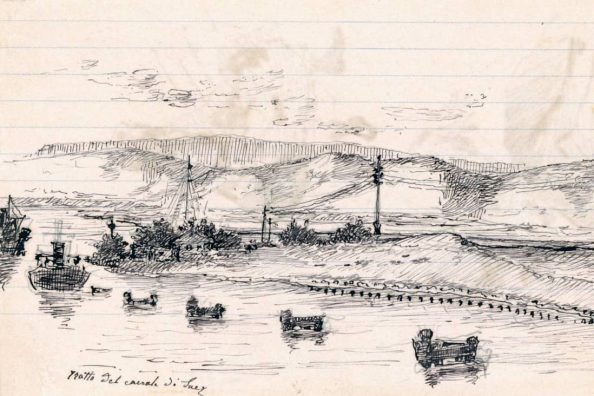
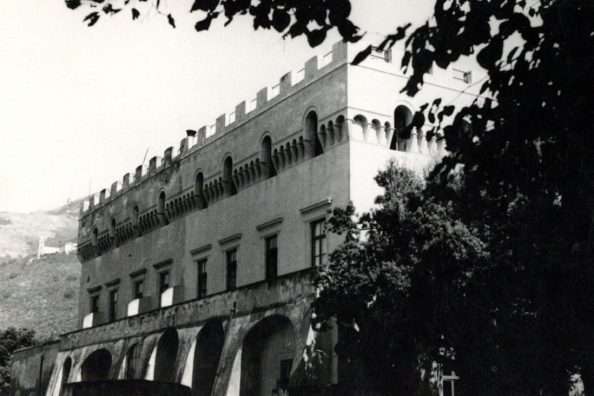
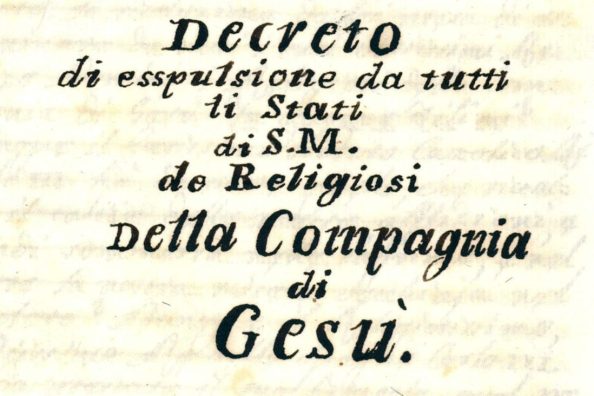
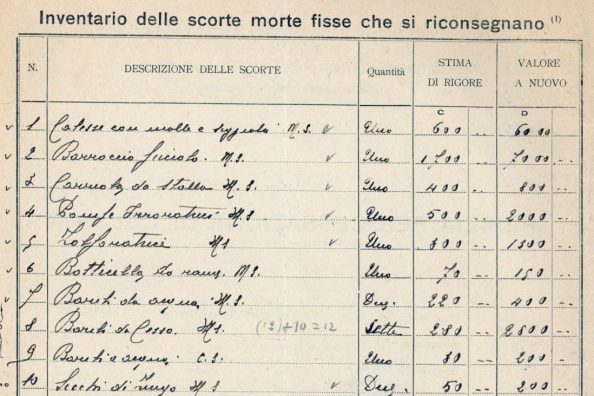
Relics, personal belongings, distinguished alumni, memories of other historical periods: a selection of interesting documents from our Archives.