Giovanni Fausti and the Jesuit martyrs in Albania
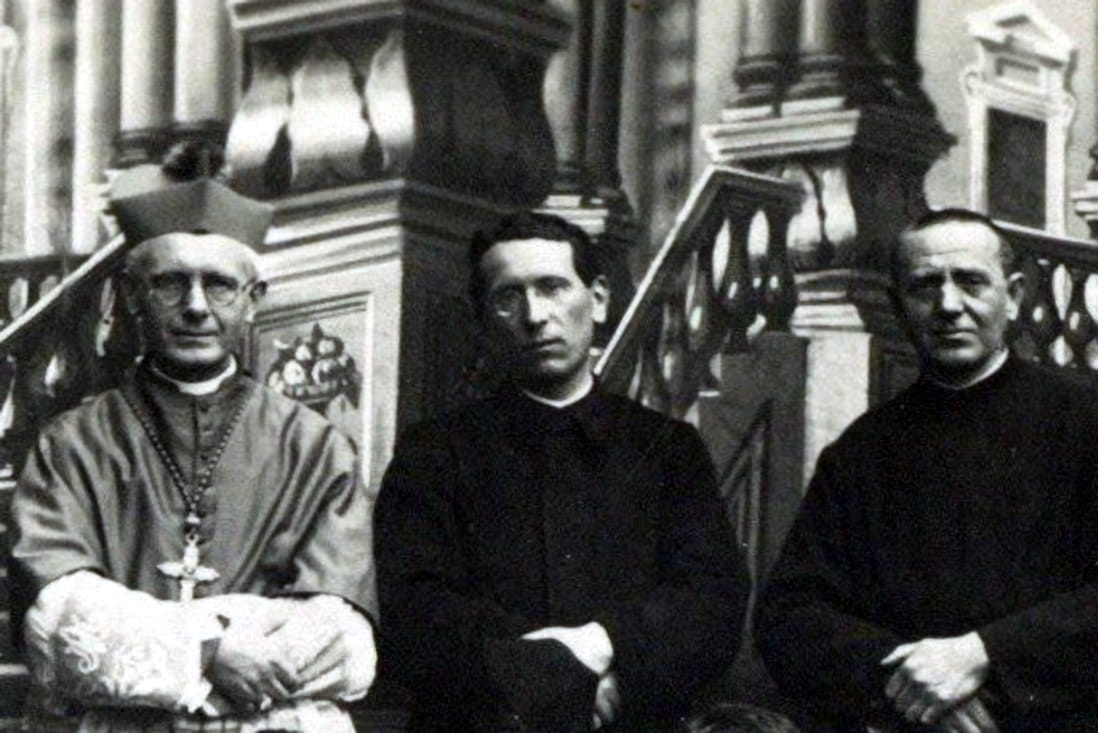
On 5 November 2016, Pope Francis beatified Fr Giovanni Fausti, Fr Daniel Dajani SJ and Br Gjon Pantalija, together with other Albanian martyrs, in St Peter’s Square. Ten years on from this significant event, we wish today to dedicate an episode to the Jesuits in Albania, seeking to understand what information about the dramatic situation in Albania reached the Province.
The source
Today’s source is preserved in the archives of the Bassano del Grappa community. These are notices and communications to be read at table. There are three in particular relating to Albania, concerning the deaths of Fr Giovanni Fausti and other Jesuits. The Provincial writes to all the communities of the Province to inform them of what is happening on the other side of the Adriatic, from where very little news is filtering through.
The life of Fr Giovanni Fausti
Before we delve into the text, let us take a look back at the life of Fr Fausti. Born on 19 October 1899 in Brozzo, he entered the Society of Jesus on 30 October 1924 at the novitiate in Gorizia. He took his final vows on 2 February 1937.
Thanks to historical catalogues and archival sources, it is possible to piece together the Jesuit’s entire life, from his entry into the novitiate right up to the mid-1940s.
Having arrived in Albania for the first time in 1929, he was assigned to the Pontifical College of Shkodër, where, over the years, he held various posts: he taught Italian, served as chaplain and librarian, was a reader at the refectory and was responsible for the catechesis of the coadjutor brothers; he also examined newly ordained priests. During these early years, he learnt the Albanian language.
He then returned to Italy in 1933, initially living in Mantua for a short period, then in Bressanone and Bassano del Grappa, before finally being assigned to the Aloisianum in Gallarate.
The house diary tells us that here Fr Fausti taught logic and critical thinking between 1938 and 1939. Up until 1941, the source records the apostolic work and spiritual retreats he frequently led in other cities. In 1942, he was appointed to Shkodër and, from 31 July, served as Rector of the Seminary, lecturer in philosophy, and director of the Apostolate of Prayer in the diocese. To these roles, he added that of Vice-Provincial from May 1945 onwards.
However, we have fewer archival sources regarding the last year of his life; we shall gain a better understanding of why this is the case in this episode. The letters found amongst Bassano’s papers are therefore particularly valuable for reconstructing what took place in Albania in the mid-1940s.
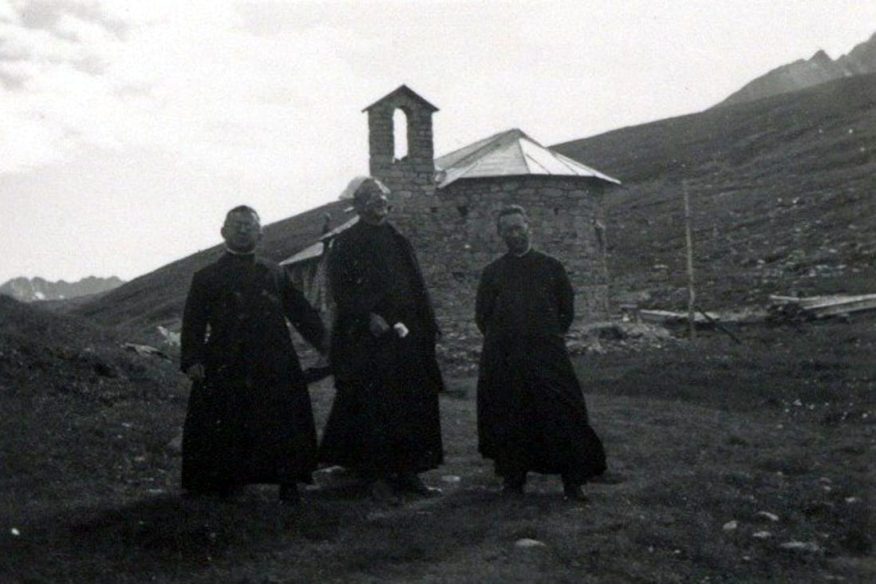
Albania: 1945 – 1946
During the Second World War, Albania was occupied by Italian and German troops, who withdrew in 1944, when Enver Hoxha came to power.
The new government began persecuting priests, nuns and bishops, as well as those who lived with them and worked for them, such as domestic staff, secretaries and employees. Father Giovanni Fausti was arrested on 31 December 1945.
There is a photograph showing the Jesuit in a street in Shkodër at the time of his arrest; today it is held in the Marubi Collection, in the museum of the same name.
Our archives contain no sources that recount in detail the final days of Fr Fausti and the other martyrs, due to the blockade of Albania that remained in place for decades.
No direct communications reached Italy, but the Jesuits managed to obtain summary information from other men and women religious who had fled Albania. The communities of the province were kept informed precisely through the notices and letters from the Provincial, which were read out during meals.
The latest news on Fr Fausti and his confreres
The Jesuits of the Veneto–Milanese Province heard updates on the situation in Albania whilst dining at the end of March 1946. It is worth noting that during meals, they would eat whilst listening to passages from the Holy Scriptures, the lives of the saints, and announcements for the Province read out by a fellow Jesuit. They had already been informed a few days before the death of their fellow brothers, but the Provincial decided to share the details he had received regarding the situation in Albania as well.
had already been imprisoned and tortured (though to no avail) in an attempt to force him to declare (contrary to the truth) that Fr Fausti had served as chaplain to the Legionaries in Spain in the fight against Communism. Having failed to extract a confession by this means, they sought to pin the blame for the imprudence committed by certain seminarians—who, in defiance of their superiors’ express prohibitions, had distributed anti-communist leaflets—on Fr Dajani, the rector, and on him, the Vice-Provincial. […] Nor did the clearest testimonies of the seminarians avail; even under torture, they declared that the superiors were completely unaware of their actions, and that had they known of them, they would have expelled them from the seminary. This led to an unjust and slanderous trial and the death sentence for the two Fathers, as if they were the leaders of an ‘United Albania’ association opposed to the government…
We have now learnt from the Superior of the Orionists in Albania, who arrived in Rome from Tirana on the 16th of this month, that our two men, together with two seminarians and a Franciscan friar, were shot during the night between the 5th and 6th of this month [it is now March], probably around dawn, and that they were buried there in a single grave.
At the end of the letter, the Provincial declared that the Albanian mission was to be considered disbanded.
This term would be used to refer to it in all subsequent catalogues, from 1946 to 1991. In the 1992 catalogue, the community, now active once more in Tirana, is officially listed.
The memory of the Jesuits who remained in Albania – including Fr Luli, who was not released until the 1990s – will never fade, and the names of those believed to be still alive or whose deaths were not confirmed appear, alongside those of their confreres from the rest of the Province, in this important source for forty-five years.
The Provincial’s letters concerning Albania are a very valuable record for us, particularly given the absence of the house diaries of the communities in Shkodër and Tirana and the personal papers of the Jesuits who lived there. In fact, along with the items found in the houses, the college in Shkodër and the house in Tirana, the archival documents were seized and subsequently became part of Albania’s national archival heritage. Long considered to have been destroyed or lost, they are in fact preserved in the Albanian National Archives in Tirana. They are no longer the property of the Society of Jesus.
The situation takes a turn for the worse
A couple of months pass and the Jesuits of the Veneto–Milan Province receive further news from Albania; churches and religious houses are being continuously occupied, their assets inventoried; it is becoming increasingly dangerous for the religious to remain, but by now it has become very difficult to flee:
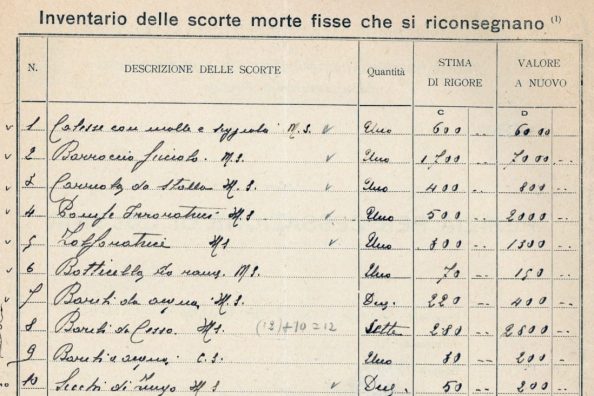
The Archbishop of Durrës told the nuns that the number of priests, religious and seminarians who had been shot totalled 12, whereas previously the figure had been 7. In the bishoprics and vicarages, an inventory was taken of everything; only the kitchen was left for the use of the diocesan bishops and parish priests […]
The churches are being left open, because they belong to the people whilst the priests belong to the Pope; however, an inventory of everything was drawn up and the priests were held responsible for it.
In Tirana, the clergy are housed in their churches and live on charity, some of which comes from Muslims; the nuns, who had been expelled from their homes, slept in the Jesuit church, and were later allowed to build themselves a small shack next to the church; the Jesuits, who had asked to be allowed to come to Italy, were given a curt reply: ‘No. We’ll sort them out soon.’
In Shkodër, the seminary was converted into a maternity home. The Franciscans, Stigmatines and Servites, left in their own homes, were forced to confine themselves to a few rooms; the other rooms were locked; everything was inventoried under the responsibility of the household staff; the parish priest is once again in prison for refusing to hand over his Catholic Action badges and is in a precarious position; the exact number of priests and seminarians languishing in prison is unknown; the seminarians who are still free but have been sent back to their families were forced to lay aside their cassocks; church attendance has increased.
At the civil hospital in Tirana there are still about thirty Daughters of Charity, because the Director is firmly opposed to their dismissal, but for how long? Meanwhile, a widespread smear campaign is being waged against them, and pressure is being exerted on Albanian women to renounce their faith […]
Sermons are not being delivered in churches to avoid malicious interpretations and the resulting harassment; a recent decree prohibits religious instruction in schools and elsewhere; it is said that in Shkodër, schoolchildren are being forced to recite the slogan ‘Death to the fascist Christ’.
The letter goes on to recount that the church in Devoli has been converted into a mental asylum; there were around 180 Italians there who had requested, in vain, a parish priest to baptise some newborns. In Gjirokastër, the birthplace of Enver Hoxha, the church and convent had been turned into a prison; the mission headquarters in Fier had been occupied; and the Servite chapel in Tirana had become a meeting hall.
The conditions facing the Albanian population were also particularly dire:
The nationalisation of private homes and furnishings has been announced; a decree of general expropriation has been issued, which would leave individuals with only two changes of clothes and underwear; in Durrës, all shops are closed, except for one chemist’s and two perfumeries, and the owners are either in prison or performing hard labour; trade is prohibited; preparations are under way to open state-run shops. Executions by firing squad are commonplace; mass arrests, even in villages, are frequent; torture is practised in the most sophisticated ways; the number of those sentenced to forced labour is considerable. […] The people can take no more.
At the end of the letter, Fr Gardin is mentioned, who is also in Albania: “According to news received through other channels, it seems that Fr Gardin and Maestro Vata, who are still in prison, have had their mattresses taken away and are forbidden from receiving food from outside”. Fr Gardin would be sentenced to ten long years of hard labour, until his return to Italy in 1955.
Latest updates from Albania
We read the words of Fr Viezzoli, as reported by the Provincial to the communities on 15 November 1946; by this time, Fr Fausti had been dead for more than eight months, and this was the latest update on Albania:
I have just returned from the Daughters of Charity, where I met the Mother Superior, who had been in Tirana and who, eight days ago, was forced to leave Albania along with 20 other nursing sisters from the Military Hospital. From that sister I received the following news, which is truly of little comfort. On the evening of the 28th, the Feast of Christ the King, at around 7 pm at our house in Tirana, Father Meshkalla was arrested, along with the parish priest, Don Stefano Kurti. A few days earlier, Brother Pantalija had been arrested in Shkodër. The reasons for the arrests are unknown: in the case of the first two, it appears to be linked to the club or oratory they ran. In Tirana, only Fr Giadri remains, along with M. [teacher, a Jesuit engaged in teaching] Topalli. Br Radovani is with Monsignor Volaj in Nenshati. Fr Troshani, having shaved off his beard and removed the vestments of the Eastern Rite priests, is now assistant parish priest in Merqinje (Diocese of Alessio). Fathers Karma and Tuci are in some parish or other.
In Shkodër last October, three priests were ordained. A few days after their first Mass, one was imprisoned, whilst the other two were forced to perform military service. In Tirana, because during the laying on of hands the priests held their right hands raised, this gesture was interpreted as a fascist salute and they were consequently subjected to interrogation.
To explore the events concerning the Jesuits and religious in Albania in greater depth, we now have access to an extensive bibliography, although research on the subject continues to yield new details. One of the works we recommend – as it contains a wealth of information on the martyrs’ trials in Albania and their trials – was edited by Fr Leonardo Di Pinto O.F.M., “Historical and Hagiographical Profile of Monsignor Vinçenc Prennushi and his Fellow Martyrs”, in two volumes, published by the Metropolitan Archdiocese of Shkodër–Pult in 2016.
The Jesuits Return to Albania
As we have noted, the Jesuits’ presence in Albania did not end with the tragic deaths of Fr Fausti and the other Albanian martyrs.
The Jesuits returned from across the Adriatic in 1991; over time, the school in Shkodër has been reopened – now named after Fr Meshkalla – whilst in Tirana the Society runs one of the city’s largest parishes. The history of the Jesuits in Albania is now enjoying a new lease of life, and numerous researchers are contacting the historical archive to gain a better understanding of the Jesuits’ apostolate in this country and the history of the so-called ‘flying mission’.
Another Fausti
There was another Jesuit in the Fausti family: Fr Giovanni’s nephew, Silvano.
He was born on 2 January 1940. His uncle lost his life six years later: on 4 March 1946 in Albania, and Fr Silvano, in his book “Dreams, Allergies and Blessings”, writes that he does not recall having met him when he came to the family home following his grandfather’s death.
We did some research in the archives and discovered, from the Gallarate diary, that on 24 December 1940, Fr Giovanni Fausti travelled to Brescia (his family lived nearby); it is therefore likely that at Christmas he saw his nephew, who at the time was not yet one year old and too young to remember it. Reading on, we then discover that on 22 July 1941, “Fr Fausti finished his spiritual exercises and went to be with his family because his father was very seriously ill; he was later out of danger, and Fr Fausti returned to the community on 16 July”. On this occasion, uncle and nephew certainly met again, but the nephew was still too young to remember it.
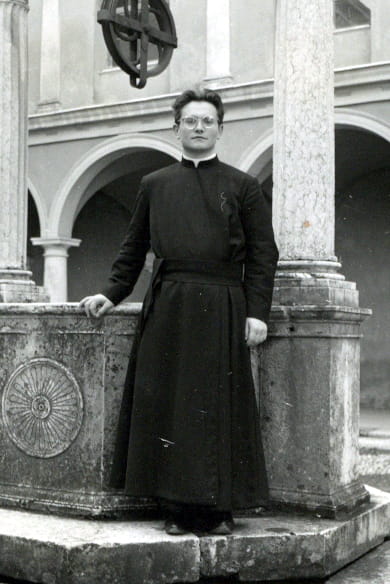
At the age of six, Fr Silvano followed his uncle’s trial on the radio and recounts having wanted to take his place when he grew up. Although he had not had the chance to grow up with his uncle or get to know him in person, he inherited his Ignatian charism, which led him to follow his example.
Thirty-six years after his uncle joined the same Province in 1924, his nephew, Silvano Fausti, also entered it. It was on 5 January 1960 that he began his novitiate in Lonigo.
Maria Macchi