Types of residences
Colleges
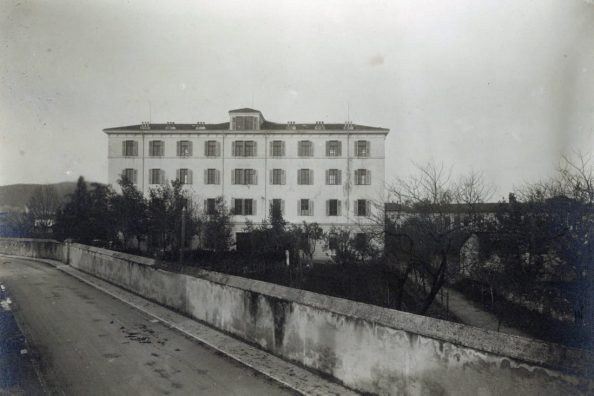
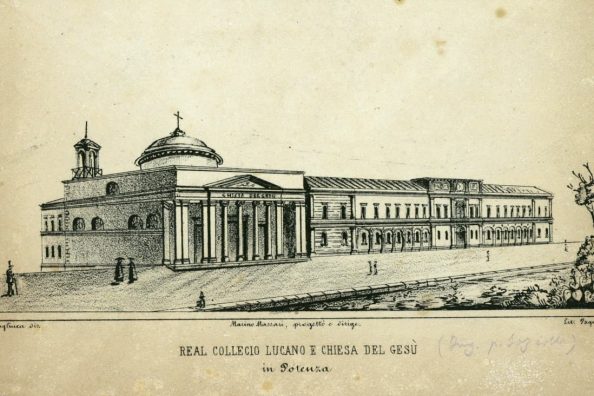
Colleges of the Society of Jesus were boarding schools, and were exclusively for boys until the second half of the Twentieth century. Pupils could fall into these categories:
- Boarding pupils. This term refers to those who studied and lived at the boarding school, with an assigned bed in the dormitory. They were usually divided by age group, and there were therefore several dormitories. Their day was structured around various activities, including recreational games and afternoon study sessions in designated classrooms; they could return to their families on Sundays if their relatives lived close enough to the college, otherwise they would go home for the winter and summer holidays. They wore uniforms, but had to purchase a range of essential items for daily life.
- Part-time boarders. A term used to describe those who were enrolled solely for lessons; they therefore attended the boarding school during the day, sometimes making use of the facilities for afternoon study and lunch. They, too, wore boarding school uniforms.
- Day pupils. These were pupils who attended the boarding school only during lessons. They were not always the same as semi-boarders. In many cases, as has been observed whilst studying the records, these were pupils from the technical school, which operated, for example, at the Massimiliano Massimo Institute. They did not wear the uniform, but their own clothes.
Le tariffe ovviamente variavano, poiché vivere in collegio prevedeva anche il costo di vitto e alloggio, oltre alla retta mensile per la frequenza. I collegi nascevano come collegi dei nobili quindi destinati, almeno inizialmente, all’istruzione dei rampolli delle classi più abbienti. I collegi erano infatti a pagamento.
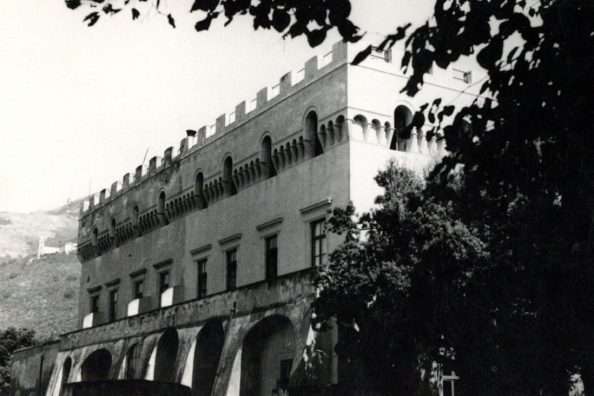
In some cases, schools and boarding schools were built, but often the Jesuits adapted properties donated by benefactor families, such as the Nobles’ Boarding School at Villa Mondragone. In these, the Jesuits ensured that halls and rooms were converted into science laboratories and, above all, into a theatre – a feature always present in the Society’s boarding schools, as theatre is an integral part of Ignatian pedagogy.
The activities of boarding school pupils include, in addition to daily study, sport, the school magazine, plays and leisure activities.
The historic Italian provinces had already closed their boarding schools or converted them into schools by the early 20th century, but the process intensified during the 1950s and 1960s. This decision was due to several factors: the high running costs associated with the boarding school buildings; the large number of Jesuits – including both fathers and brothers – required to run each institution; the decline in enrolment; and Father Arrupe’s decision to prioritise the missions as a more urgent apostolate for the Society of Jesus than the boarding schools. The college buildings were often repurposed to house the Society of Jesus’ apostolic schools and were subsequently sold.
Religious schools
This term refers to the schools opened by various religious orders, usually during the period between the Unification of Italy and the Lateran Pacts, to ensure the religious and spiritual education of children at a time when this subject was absent from the school curriculum.
They ceased to exist when religious education was introduced in schools from 1929 onwards. We know that schools of this type existed in Mantua and Padua in the Veneto-Milanese Province.
These were afternoon schools whose aim was to supplement the teaching of traditional subjects with the doctrine of the catechism. The children were also offered trips, excursions and music lessons; theatre performances and concerts were also organised.
Religious schools also served as a point of reference for many families, who could thus leave their children in a safe place after school.
Evening schools
Vocational training was provided by the Society of Jesus through various institutions, such as the Ricreatorio S. Giuseppe in Florence, which had carpentry workshops, and the vocational training centres built by the Order in collaboration with the POA in the areas affected by the Polesine flood, with the aim of training blacksmiths and carpenters.
There was, however, one organisation which, above all others, identified literacy and spiritual assistance as its primary aims – first for the Carabinieri, then for various law enforcement agencies, and eventually for lay workers: the Opera Massaruti. In the history of our historic provinces, this is a unique institution. Although this institution has not been active since the 2010s, the Astalli Centre has, in spirit, inherited its social mission, providing Italian language lessons to foreigners.
Apostolic schools
Also known as minor seminaries, as attendance at them was a prerequisite for entry to the major seminary or the novitiates of religious orders: they welcomed children and young people aged between ten and fourteen who showed an early vocation. Many Jesuits who entered the novitiate at the age of fifteen often came from the apostolic schools. There they had heard testimonies about religious life and, in particular, about the Society of Jesus.
In these schools, in addition to the traditional subjects, the pupils learnt the liturgy and how to celebrate Mass.
For the poorest families, the apostolic schools often represented the opportunity to ensure their children received an education for a longer period than compulsory schooling, which once ended at primary level.
These schools were closed from the mid-twentieth century onwards; the last one was that of Roncovero, which closed in 1985, as it was no longer in keeping with the times or the state education system.
Residences
A term used generically to refer to a residence housing a community. Some are known as ‘Case Professe’, such as those in Genoa, Palermo and Rome. These are the main Jesuit residences in each city; those opened subsequently did not take the name ‘Professa’.
The community, on the other hand, refers to the group of Jesuits living in a residence, with its own internal hierarchy: superior, minister and all other roles.
The residences feature kitchens, chapels for communal prayer, a library and a reading room, as well as rooms for the Jesuits. In the past, each residence also had parks or gardens – though these are less common today in urban residences – and there were also rooms set aside for carpentry, bookbinding and shoemaking workshops where the Jesuit brothers worked.
House of Spiritual Exercises
The house of Spiritual Exercises was a residence designed to accommodate not only the Jesuit community but also groups of people, or individuals, wishing to undertake the spiritual exercises as conceived by St Ignatius of Loyola. This is one of the distinctive charisms of the Society of Jesus: the Spiritual Exercises.
The house usually has a large number of rooms to accommodate those taking part in the spiritual exercises. These houses were not intended to welcome only Jesuit retreatants but also laypeople, members of other religious orders, and groups of the faithful. The exercises were often aimed at professionals from various sectors: workers, craftsmen, and tram drivers, supported by the Workers’ Retreats Association or the Apostleship of Prayer.
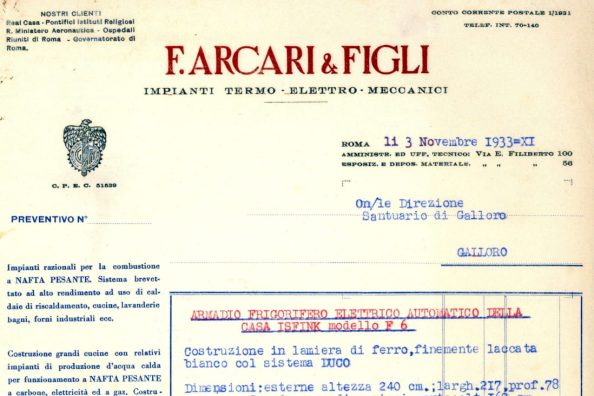
The communities living in these houses included Jesuits trained as guides for the spiritual exercises, and often, when necessary, other confreres would arrive to lead the exercises. These were houses for spiritual exercises, including, amongst others: Villa Walpole in Naples, the Galloro residence in Ariccia, Villa S. Ignazio in Genoa, the Cangiani residence in Naples, the Cecchina residence in Rome, and the Sacred Heart retreat house, which had become the General Curia of the Society of Jesus.
Novitiate or house of First Probation
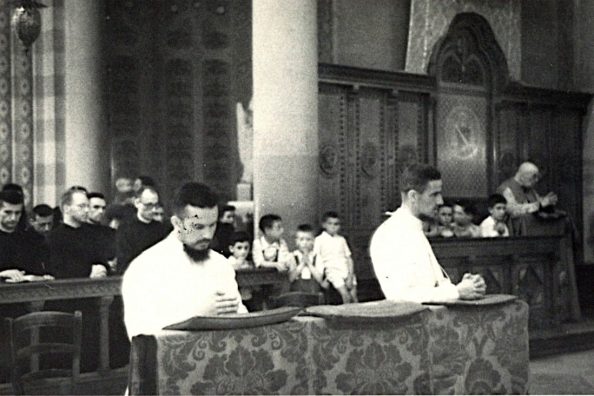
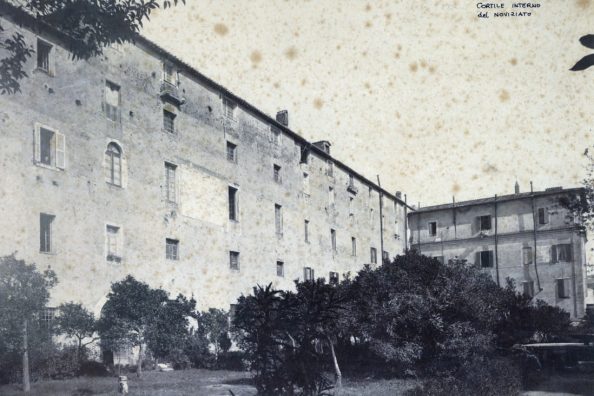
Novitiate houses and those of third probation had to meet very specific criteria to ensure the formation of the young men: they had to have extensive grounds; indeed, it was important that they were situated away from built-up areas or, at any rate, isolated from other dwellings, to ensure that the novices could spend this period in peace and quiet.
One wing of the novitiate, known as the ‘apartment’, was set aside to accommodate novices during their first few days. They would usually stay here for one or two weeks to settle in, get familiar with life in the novitiate and assess whether it was the right choice for them. Once the ‘apartment’ period was over, if they were still convinced of their choice, they could take the novice habit and enter the novitiate proper.
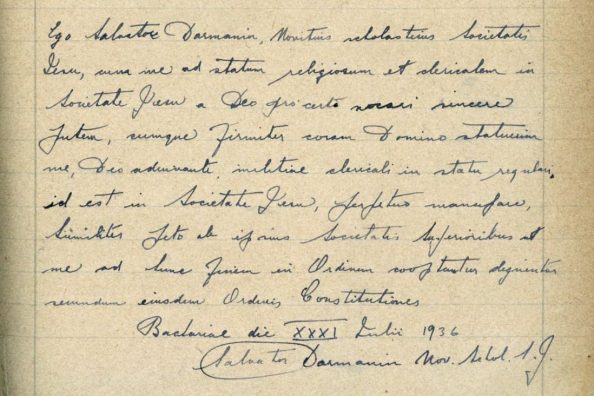
At the end of the two years, the novices take their First Vows; in the presence of the Provincial, they sign the document which is then added to their personal file. Their formation then continues with a course of study in philosophy and theology, followed by the magisterium and subsequent stages. In the past, each historic province had its own novitiate; however, from the 1950s onwards, these were merged to form the novitiate of the Province of Italy, which was based in Frascati, Ciampino and finally in Genoa.
House of Tertianship or Third Probation
The Tertianship house accommodated Jesuits, both from their own and other provinces, who were undertaking the final stage before their official incardination into the Order. The historic provinces had their own third-year houses but, from the 20th century onwards, they increasingly preferred to send Jesuits to a Third Probation house in another province.
For several decades, for example, the house in Florence served as the Third Year House in Italy, and generations of Jesuits were formed under the guidance of Fr Igino Ganzi. Subsequently, this house was also closed. Today, EUM Jesuits spend their Third Year abroad.
Infirmaries
Throughout the history of our provinces, infirmaries were located within the residences: one wing was set aside for elderly Jesuits or those no longer able to carry out their apostolic work, just as in colleges, where they were used to care for sick boarders or to isolate infected patients in the event of an epidemic. In our archives, we preserve at least one infirmary diary, that of Lonigo.
Featured documents
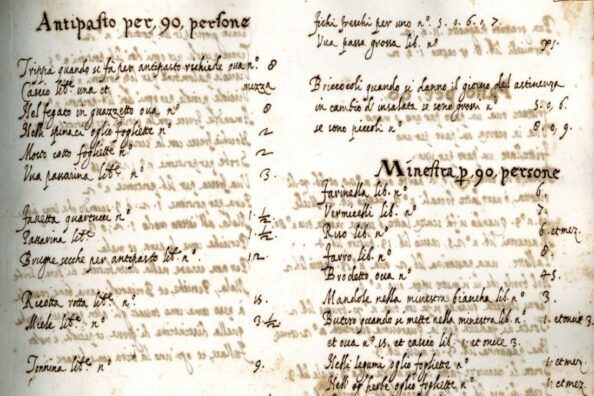
Relics, personal belongings, distinguished alumni, memories of other historical periods: a selection of interesting documents from our Archives.