A story of sharecropping
Sharecropping was a contractual arrangement for working the land that was widely used in medieval, modern and contemporary times.
Today, we take a brief look at the life of a sharecropper in the mid-20th century. Before explaining how our archive is able to tell this story, let us take a closer look at what it meant to work as a sharecropper.
What was sharecropping?
Sharecropping is now illegal; contracts of this type have not been permitted since 1964, and those still in force at the time were allowed to run their course before being converted into tenancy agreements in the years that followed.
The sharecropping contract was drawn up between the landowner and a farmer, sometimes referred to as a tenant, who undertook to work the land. Half of everything he produced would go to the landowner. This arrangement could lead to extreme poverty for the sharecropper’s family in years when the harvest had been poor or during famines. Sharecroppers did not have access to modern farming equipment and could often rely only on the labour of their own family. Furthermore, the worker did not own the property, nor could he claim ownership of it even after many years. Even the tools he used did not belong to him but were an integral part of the property. The tenant farmer and his family’s right to remain in the house was tied to the contract.
Sharecropping was practised particularly in central and southern Italy, and was often the preferred method of large-scale landowners and major landowners.
The source
Today’s source, however, was discovered whilst reorganising the records of the Roman Province’s bursar’s office, amongst the papers relating to the property of Villa S. Ignazio in Fiesole.
The Jesuits did not enter into a sharecropping arrangement with the tenant farmer mentioned in the papers. As we well know, often the Jesuits themselves worked their own lands.
Generations of coadjutor brothers worked the land surrounding the colleges or belonging to the residences, particularly in the Ancient Society, often assisted by novices. There were also farmers or stewards, but they were salaried employees, and we find evidence of this in the late nineteenth century.
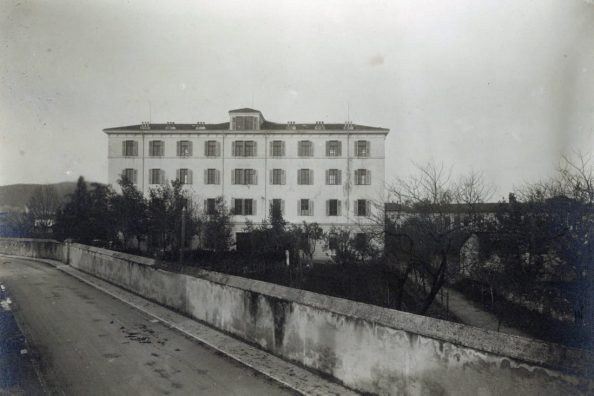
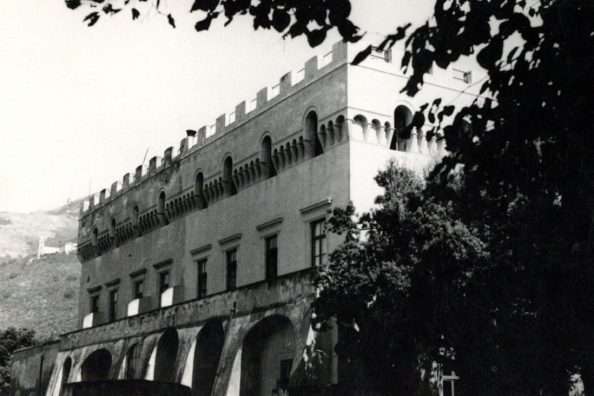
Villa S. Ignazio in Fiesole
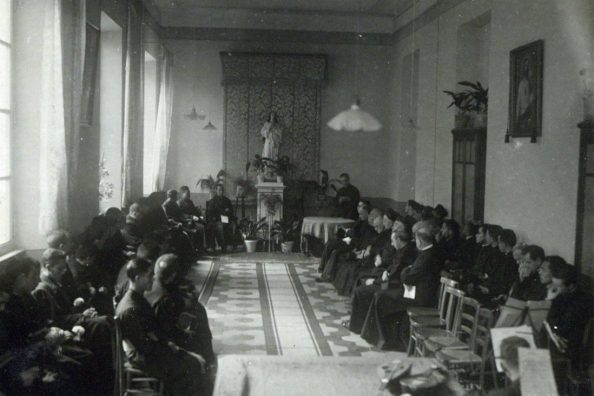
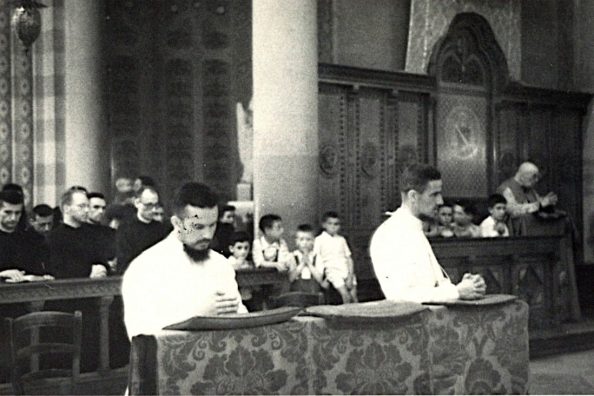
The Province purchased the property from the Lualdi sisters in the early 1950s. In the following decades, it would serve as the third-year residence for Jesuits of the Roman Province as well as those from other Italian provinces, and would be used as a retreat house before being sold.
Villa S. Ignazio was situated in the countryside, surrounded by a large estate, although close to Florence. At the time of purchase, a tenant farmer who had been there since 1946 worked the land: Adamo C.
We know this because, alongside the property documents, there is also the report on the termination of the sharecropping arrangement under which he took over from his predecessor: Eugenio N.
The former owners themselves were concerned about not sending the sharecropper away and the Jesuits agreed. Part of the correspondence is devoted precisely to the matter of the sharecropper. We know that in 1952 the sharecropper moved with his family into the barn, owned by the Lualdi sisters. Terminating a sharecropping contract did not merely mean leaving a farmer without work, but also depriving him of what had until then been his home.
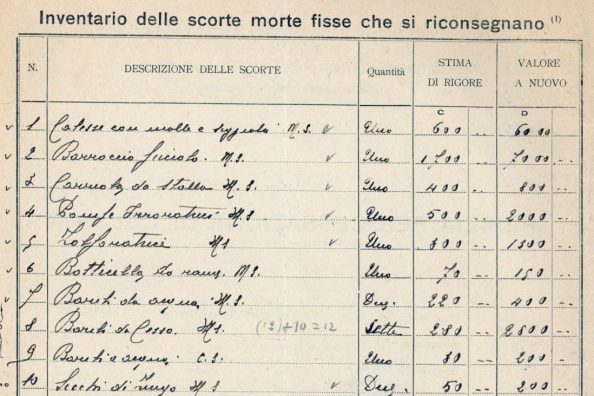
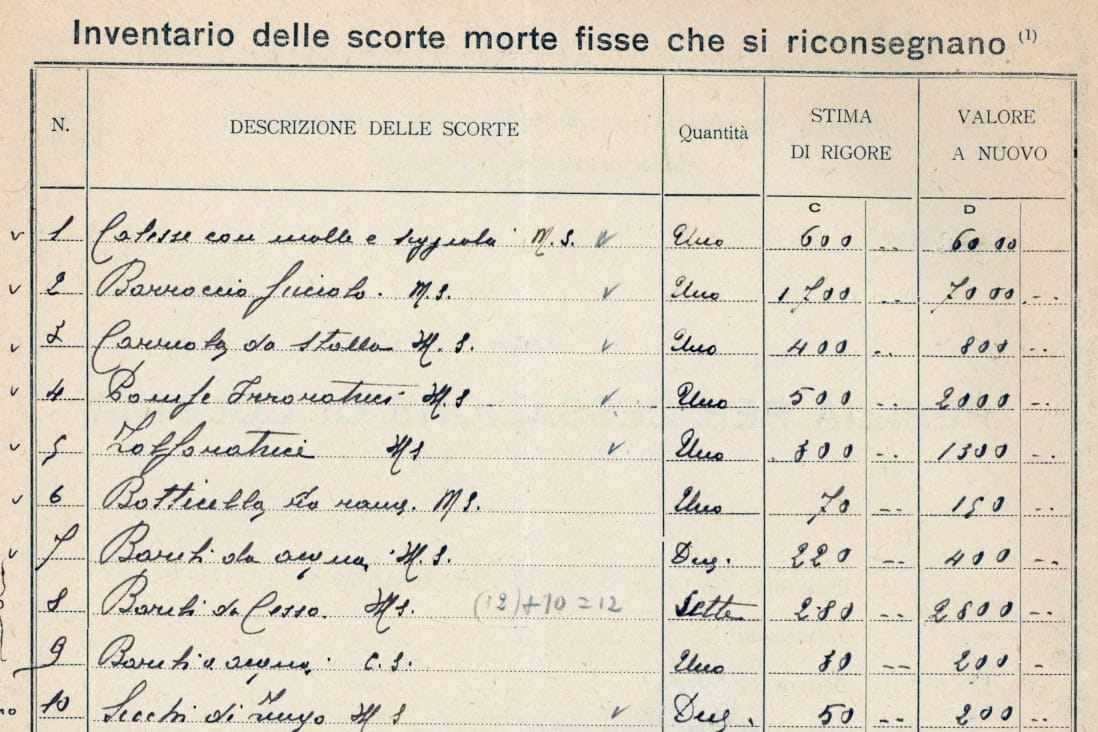
Even the items found on the property did not belong to the sharecropper and had to be returned. Thanks to this document, we also know what was available to the sharecropper on the land belonging to Villa S. Ignazio.
Among the so-called ‘fixed assets’ we find: a spring-suspension cart with a seat, buckets, spray pumps, a small copper barrel, a sulphuriser, a pump, a small cart, and barrels. Among the ‘circulating fixed assets’ there are: artichokes, alfalfa, pebbles, and stakes for the vines.
Among the assets handed over to the tenant farmer are some animals: a pregnant cow, a twenty-year-old donkey.
The documents in our archive do not extend beyond February 1952; to study the history of the sharecropper Adamo C., it will therefore be necessary to consult other archives. This is one of many instances of stories of people, who had no direct connection with the Society of Jesus, have nevertheless found their way into our archives.
Further information in the document
The source does not merely recount a part of these two sharecroppers’ lives. Indeed, there are certain elements that immediately catch the eye. The document confirming the transfer from one sharecropper to another bears the heading of the ‘Federation of Fascist Trade Unions and Farmers and Union of Fascist Agricultural Trade Unions’; on either side, the coats of arms featuring the fasces are also visible. However, the document is dated 19 January 1946. Fascism no longer existed, but the Italian Republic had not yet been established; the referendum was in fact scheduled for the following 2 June, which is now a national holiday.
The explanation is simple: despite a terrible world war that had ended just a few months earlier and left countless cities in ruins, life goes on. Out of necessity to complete documents and submit the paperwork required by the bureaucracy for work-related activities, people continued to use the forms available at the time, which often still bore the symbols of the former fascist regime. Furthermore, various associations retained their old names until these were changed by the legislature.
A microcosm of stories
Even today, the archive shows us that the records produced by a religious order or an ecclesiastical body do not relate exclusively to its own history; rather, they contain numerous accounts of ordinary people.
Our documentation, thanks in part to the work of the many researchers who consult it daily, bears witness to how the life of every single human being can leave a trace in various documents, often from bodies with which they have never had any direct connection.
Today’s episode is dedicated to all the sharecroppers and their families who, often for generations, worked someone else’s land, hoping that it would provide a livelihood for everyone.
Maria Macchi