Reconstructing the history of a residence
Many researchers contact us for information about the presence of Jesuits in certain cities or about specific residences and colleges. Sometimes these houses still exist, with a long history behind them, while at other times they are small establishments that existed for only a few years and have been forgotten.
How can we reconstruct the history of a residence? What tools are available to researchers and what are the most useful sources for this type of research? After dedicating an episode to reconstructing the biography of a Jesuit, today we will see how to do the same for residences, colleges, houses of exercises and novitiates.
The Old Society and ARSI
Unfortunately, the records produced by residences prior to 1773, both in Italy and in most of Europe, are not in the historical archives of the Jesuit provinces. After the suppression, the ancient Italian and European states confiscated the Society’s assets: residences, land and colleges, and with them the archival and book heritage.
In addition to searching for these collections in the State Archives, researchers can contact ARSI. Here, the historiae domus of residences and colleges have been preserved since their foundation, as each community sent a copy to the General. ARSI also has other sources, such as the historical catalogues of the Old Society, which, unlike those of the New Society, are not available online, as well as the Collegia Collection. However, the name of the collection should not lead us to believe that ARSI contains the papers produced by all the colleges of the Society: the entire General Curia complex would not be large enough to contain them. Instead, the collection contains various types of documents that the residences have sent to the General over time: letters, notarial deeds, and sometimes plans and floor plans. It is certainly useful to start here for initial research and then move on to the correspondence between the General and the pro tempore superior of the residence under study.
Before contacting any archive, researchers should always check the Jesuit bibliography and the journal Archivum to find essays and studies already produced on the subject. Scholars and local historians, often using documentation preserved in archives, have already reconstructed the history of many colleges. By contacting the archive directly, you risk finding material that is already known to the academic community and even published. It is also advisable to avoid moving documentation unnecessarily.
On the trail of ancient residences
In the history of the Society of Jesus, thousands of residences have been opened, closed and re-established. Mapping them, although an idea that often crosses the minds of archivists and historians is a daunting task.
There is therefore no record of all the residences, but there are various tools available to reconstruct the history of each one. Residences, colleges, houses of exercises, novitiates and scholasticates always depended on a Province. Therefore, the first thing to do is to find out the city of college and then the Province to which it belonged. A useful tool in this first phase is the Atlas.
This geographical atlas lists the various residences and colleges by geographical area corresponding to the Jesuit provinces. It allows us to understand immediately which the Province of a city is.
It should be remembered that the Society of Jesus, like other religious orders, ideally divides the world into provinces. These often corresponded to the borders of the ancient Italian and European states. Over time, the provinces were unified, much later than the birth of modern European states. Italy is a prime example: it was founded as a nation on 17 March 1861, with Rome becoming part of it on 20 September 1870 with the fall of the Papal States. However, the Italian Province of the Society is the result of the merger of the five historic provinces on Italian soil (Veneto-Milanese, Turin, Roman, Neapolitan, and Sicilian) only in 1978. The French Province was also divided in the past into several provinces, including Champagne and Toulouse.
New Society
If, on the other hand, we are interested in a residence that was active from 1814 onwards or that was returned to the Society in the New Society, then we have several tools and sources at our disposal.
It is always essential to consult the documents in ARSI: the General’s correspondence, the Collegia Fund and the historiae domus also provide us with information about the New Society.
Once we have identified the province to which it belongs, we can start with the historical catalogues of the Province. If we have a reference period, we can take the catalogues for those years and begin to note down all the superiors who have served there, the names of the Jesuits who lived and worked there, and the works and activities carried out by the community. Thanks to the catalogues, we can discover that the Apostleship of Prayer was active in that city, that the boys at the college were enrolled in the Marian Congregation or the Ristretto dei Dodici Apostoli (Society of the Twelve Apostles), or that the Jesuits provided spiritual assistance to tram drivers, farmers or workers. If, on the other hand, we do not know when the residence was opened, we need to check the catalogues one by one or by sampling.
Sources: historiae domus and litterae annuae
Once the researcher has identified, thanks to the historical catalogues, the Province to which the residence belonged and the years in which it was active, they can contact the archive.
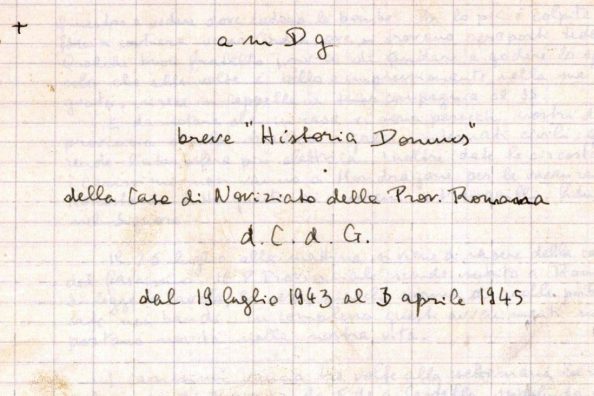
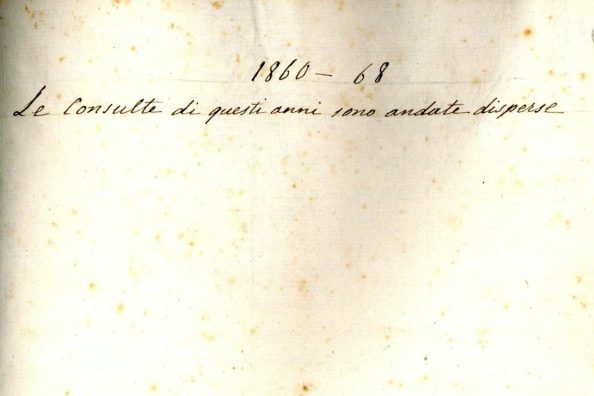
What are the most useful sources for their research? The first is certainly the historia domus, together with the litterae annuae. These are reports, the former triennial and the latter annual, which each residence had to send to both the Provincial and the General. For this reason, today there is a copy in every provincial historical archive of the Company and one in ARSI. In the event of gaps in the provincial archive, it is possible to check whether the General’s copy is in ARSI.
These two documents allow researchers to cover fifty or a hundred years of history in a short time. The historiae domus are usually composed of two or three pages, so each file contains the history of one house. However, we do not find detailed information; they are a summary report of what happened during the year, the apostolates of the fathers, the list of the deceased, extraordinary events, and sometimes there are reports of construction work in churches or the restoration and renovation of a residence.
Sometimes there are memoirs about the reopening of residences after the period of suppression. In fact, the Jesuits who returned to live in cities and towns felt the need to fill that gap, recounting their presence in the past and, in detail, their return.
Sources: house diaries
While the historia domus and litterae annuiae provide an overview of the history of the community, the house diary allows us to observe its daily life in detail.
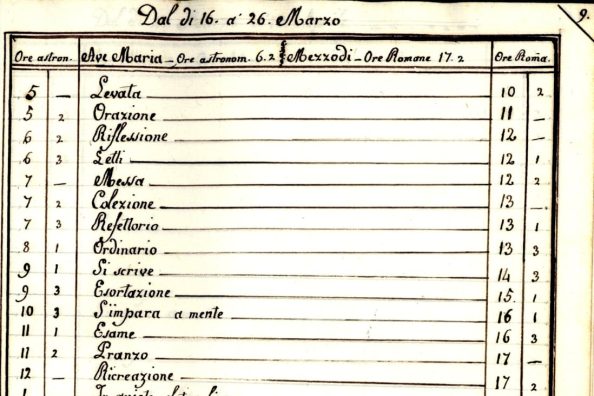
The house diary, comparable to the medieval chronicles that religious orders used to keep at the time, records what happened in the residence on a daily basis. It contains a variety of information: menus, medical conditions, the apostolate of fathers and brothers, and the advent of technology.
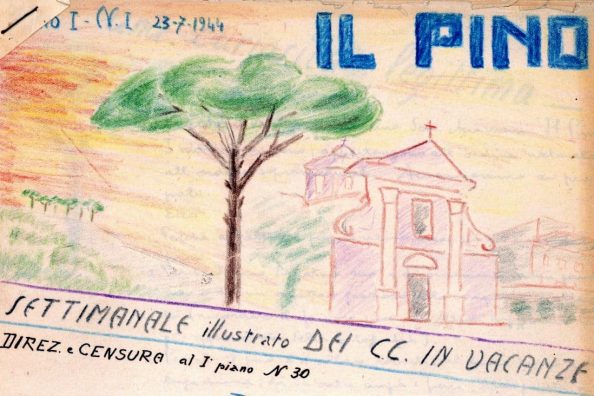
Often, diaries of the church linked to the residence or college are also preserved, as well as diaries of congregations based there. In one case, we found the diary of an infirmary.
Sources: documents in the collection
The collection also contains other types of documents useful for research.
Among the papers concerning a residence, there may also be inventories of assets, often drawn up when a residence was sold or abandoned. These inventories are very valuable because they provide a snapshot of the premises: the writer lists, room by room, all the objects and furnishings in existence, often indicating the quantities as well.
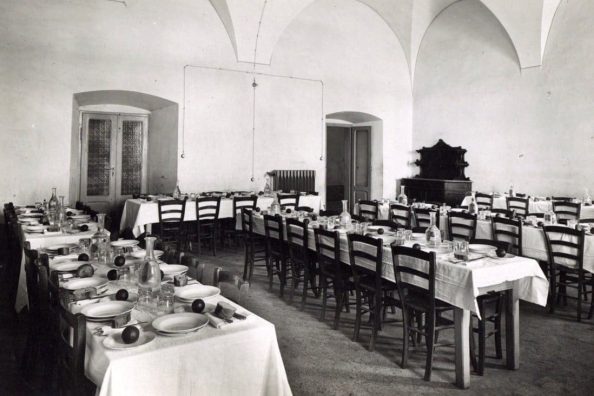
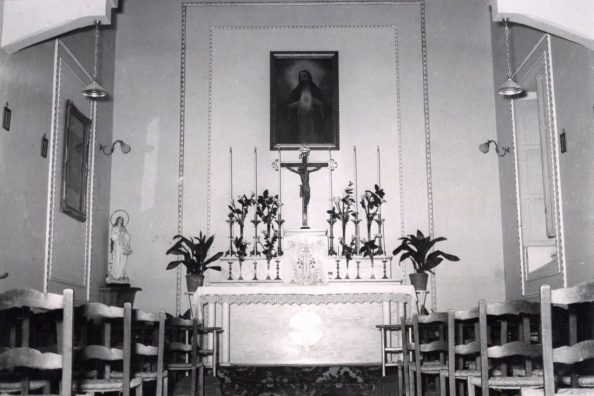
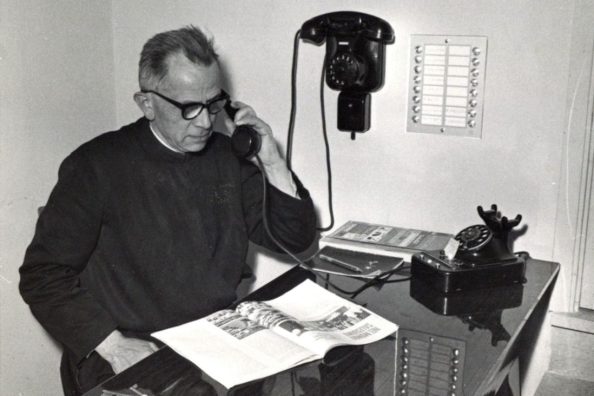
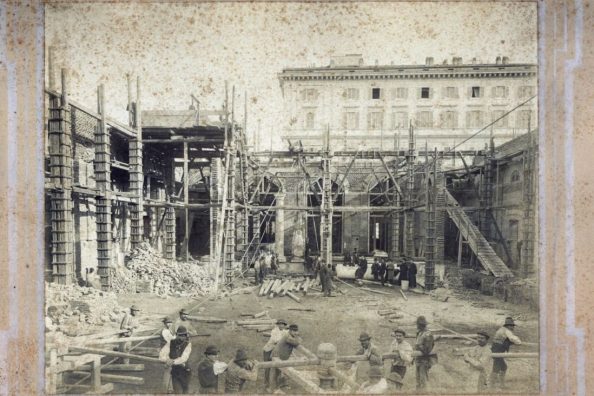
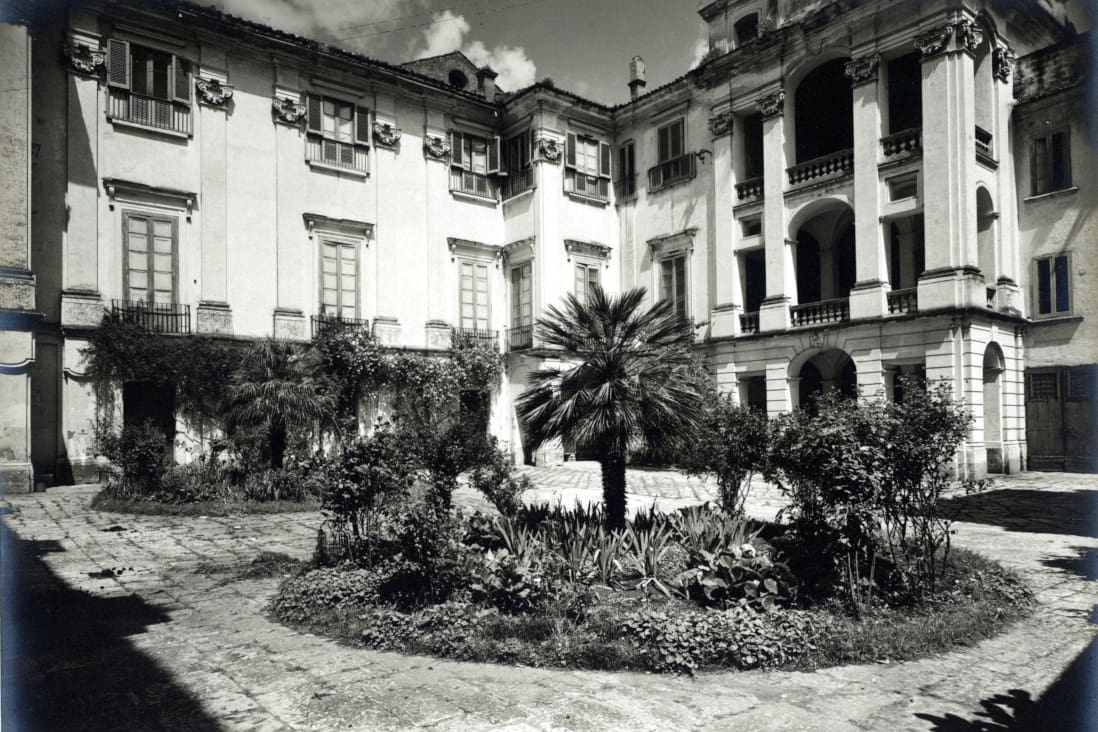
Other useful sources are maps or plans and designs of residences. Provincial collections often include a photographic collection of photographs taken of both buildings and Jesuits. There are entire albums dedicated to residences and colleges whose interiors and exteriors, as well as furnishings, were photographed by the Jesuits. In this case too, some of the photos were taken shortly before the closure of the house, to preserve its memory, or were intended to be used to advertise the college. The photographs are a valuable source, especially in the case of buildings that no longer exist or are in ruins. However, we can only rely on this source for residences that were open or active after the spread of photography.
So far, we have seen what sources are available in the provincial archives of the Society and in ARSI. However, there are also other archives to consider when researching residences and colleges.
State Archives or National Archives
As we have seen for the history of Jesuit residences, especially those active during the period of the Old Society, the State Archives cannot be ignored. This is not only because many of these archives contain the funds produced by the former Jesuit residences, in the so-called Jesuit funds or within the papers of the suppressed male congregations, but also because the funds of the Ancient Italian States contain documents on the presence of Jesuits in certain territories. Just as an example, we can mention the Congregation of Good Government funds, preserved in the State Archives in Rome. One of the series in these funds preserves envelopes of documents divided by city of the Papal States. Information on religious orders active in the city is often found. We always advise our researchers to check whether there are papers on the Jesuits or on a college or one of the residences in one of the cities of the State. In addition, the State Archives also contain documentation on residences after the years of suppression. The proclamations and edicts of the various states, which are often found in the State Archives, are also a source to be taken into consideration.
In the central state archive, located in Rome’s EUR district, there are other collections useful for this research relating to the management of the assets of religious orders.
Another state archive that is indispensable for this research is the historical archive of the FEC, located at the Ministry of the Interior. Here, the files on the liquidation of ecclesiastical assets are kept, including hundreds of files that recount the transfer of ownership of churches and convents from the Church to the state.
Vatican Apostolic Archive
The Vatican Apostolic Archives are also a must for many researchers, especially those conducting academic research. If we are interested in the permanence of the Jesuits in a particular city or in the history of a house, it is essential to read the ad limina visits. Every three years, the bishops made a visit throughout the territory of the diocese (ad limina visit means visit to the territory, to the borders). At the end, they wrote a report for the Pope. That document is now in the Vatican Apostolic Archives, in the Roman Congregations collection. However, a copy of the report remained in the diocesan historical archives.
Also in the Vatican Apostolic Archives, depending on the historical period we are interested in, we can check documents and reports in the archives of the papal representatives. These are particularly useful for those studying the missions, given that the Papal Nuncio was a point of reference for all missionaries in foreign lands. Obviously, we cannot fail to mention at least the fonds of the Secretariat of State. There are also numerous funds with information on the Jesuits. It is always necessary to consult colleagues for useful information.
Diocesan historical archives
As we have seen, a copy of the report on the bishop’s periodic visit remained in the diocesan historical archive. Therefore, for those who are unable to visit the Vatican Apostolic Archives, it is still possible to read the reports of the bishop’s visits. In the diocesan historical archives, we may also find useful information in the bishop’s correspondence. In addition, some diocesan historical archives also preserve parts of former Jesuit collections.
Municipal historical archives
Since the confiscation of religious orders’ assets during the process of national unification also involved municipal administrations, it is necessary to carry out research in municipal historical archives as well. In fact, the minutes of the handover of colleges and residences are often preserved in the collections. Municipal resolutions are also very useful, especially for finding out what happened to the buildings, which in many cases were then used for other purposes: they became Carabinieri barracks, hospitals, schools, or municipal offices.
Libraries
Although we might think that documents are kept in archives and books in libraries, this distinction is not always so clear-cut. Libraries may hold archival collections, sometimes because they are donations of papers that arrived together with the donor’s book collection, and sometimes for historical or institutional reasons. This is the case of the National Library of Rome and the Roman College Fund. In fact, dozens of researchers turn to ARSI, our archive and that of the Gregorian University every year in vain, searching for the Roman College’s archival fund. These institutions preserve the college’s historiae domus, the correspondence sent by the rectors to the General or Provincial, but not the fund produced by the institution. To understand why it is now in the National Library of Rome, we must go back in time. After the fall of the Papal States on 20 September 1870, the building that housed the Roman College became the property of the Italian State and the Jesuits left it. Everything inside also became the property of Italy. Half of the building became the first public secondary school in Rome, the capital of the new state, and the other half became the National Library’s Rome branch. It should be noted that there are other branches in major Italian cities such as Florence and Naples. The library’s first collection consisted of the former Jesuit library of the Roman College, which remained in the building. In the 1970s, the new headquarters were built in Castro Pretorio and the library was moved there. Today, the offices of the Ministry of Culture are located in its place. For this reason, the archival collection of the Roman College is now in Castro Pretorio.
We know that other libraries, both state and civic, hold Jesuit collections, so it is always a good idea to study the history of the buildings and documentary collections of the Society’s residences and colleges in order to understand their subsequent use.
Private archives
Family or private archives may contain traces of relations with the Society of Jesus.
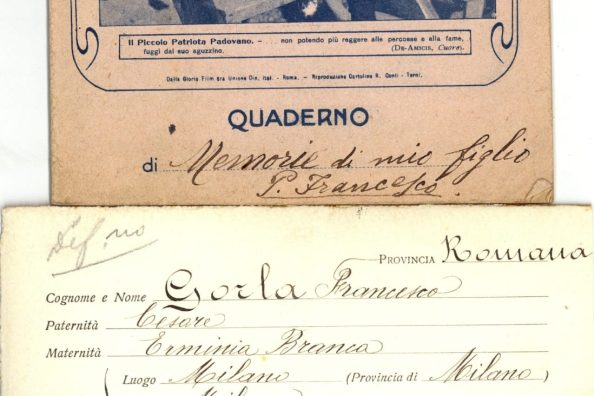
Memories of years spent in college may be preserved in the archives of the families of boarders, as in the case of Monaldo Leopardi and his relatives who studied in our colleges. We are entering a more difficult field of research because, unfortunately, only a few families have their own private archives, organised and available for consultation. Most family papers have often been lost.
There are therefore many archives to consult in order to reconstruct the history of residences and boarding schools and, as we have seen, we start with those of the Society of Jesus and move on to the archives of the Holy See, the diocesan archives and the national archives.
Maria Macchi