Renovating a residence
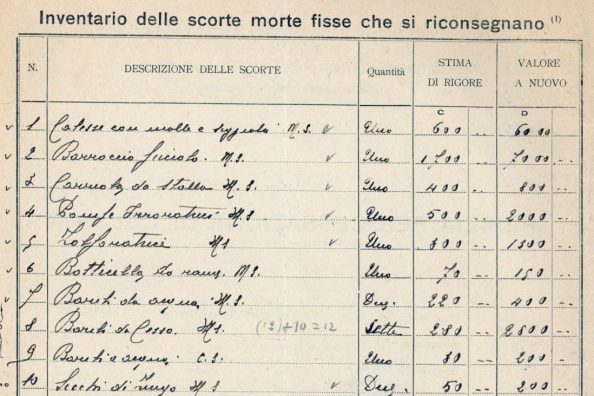
Anyone who has ever renovated an apartment knows that it requires a great deal of patience: it is a source of worry and financial expense. If renovating a single dwelling requires plans, estimates and invoices, imagine the amount of material produced for the renovation of residences and colleges. This documentation is very valuable because it provides us with a list of materials, the names of the professionals and companies involved, and the costs of labour and materials. Renovation can also “tell” us how times are changing and how religious houses are responding to societal transformations and new technologies.
Religious archives offer a wealth of material to labour historians, particularly in files concerning renovations. Let’s find out more about what they contain.
When a religious organisation renovates a property
The Society of Jesus renovates properties for practical purposes. When, in the early 1860s, the Borghese family donated their villa to the Roman Province, where the College of Nobles of Villa Mondragone would be established, it was by then dilapidated and falling apart, having been uninhabited for almost a century. Initially, only priests and boarders could use the central part, as rain leaked through the roof in the rest of the rooms.
Furthermore, the villas, donated by Jesuit families or benefactors, were built for residential purposes and often required significant modifications to various rooms in order to accommodate a school. The Jesuits had theatres built, a feature that always characterises the schools of the Society, as well as laboratories, classrooms and dormitories, which often had to be enlarged when enrolment increased. For sports, they adapted areas of the house into gyms and installed gymnastic equipment. At Villa Mondragone, Vignola’s portico was equipped for this purpose, while at the second Massimo site, the boys played basketball in the inner courtyard. The basket was installed near the columns. There were also needs related to the contingencies of war.
At the end of the Second World War, every province had at least two or three buildings seriously damaged by bombing, destroyed. In these cases, a claim was filed with the Civil Engineering Department because the Italian State would cover all or part of the expenses incurred. The documentation produced for these claims can now be found in files with the eloquent title “War Damage”.
In Brescia, it was necessary to rebuild most of the Collegio Arici, and in Milan, the Leone XIII institute, of which nothing remained. In the Province of Rome, the damage ranged from buildings that needed to be completely renovated because they had been gutted by bombing – Galloro – to repairs of only a few elements. At Villa Mondragone, for example, bombs fell in the park, one of which hit and set fire to Villa Vecchia. The college was saved, but the glass in all the windows was shattered. Think of the enormous cost of replacing the glass and frames of all the windows in such a large building. There is a file dedicated solely to the supply of new frames and glass.
Other reasons for renovation include the need to expand some buildings because they are intended, for example, as exercise rooms, or the conversion of residences and boarding schools into flats. In the Roman Province, for example, the Ricreatorio S. Giuseppe building no longer exists; it was demolished in the 1960s and replaced by apartment buildings. The Collegio S. Francesco Saverio in Livorno, whose façade is still intact today, has been converted into residential units.
These conversions respond to the need for each province, as provided for in the Constitutions, to self-finance its own works and activities.
Sometimes, however, it was necessary to build some properties from scratch, as in the case of the second headquarters of Massimiliano Massimo Institute.
Times change
The documentation of a renovation also tells us a lot about how times change. In the works carried out in the early decades of the 20th century, for example, we may find estimates for the construction of bathrooms.
In fact, throughout the 19th century and for several decades of the 20th century, the bathroom was nothing more than a chamber pot. This was true for both lay people and religious. We also find evidence of this in the colleges of the Society of Jesus, where the task of emptying chamber pots and cleaning them fell to the servants.
For many people, it was only after the Second World War, during the economic boom years, that it became possible to have a bathroom in the home. Having a bathroom in the home before the 1940s was a real luxury.
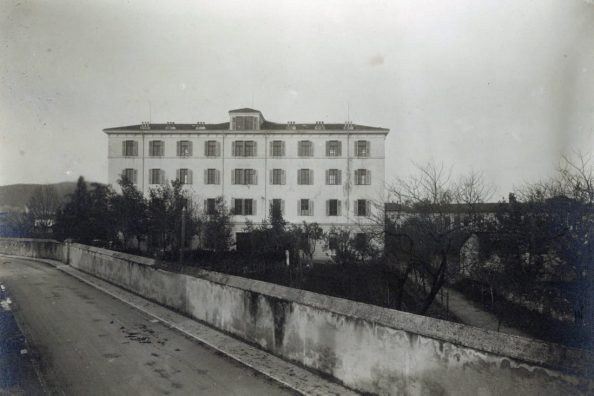
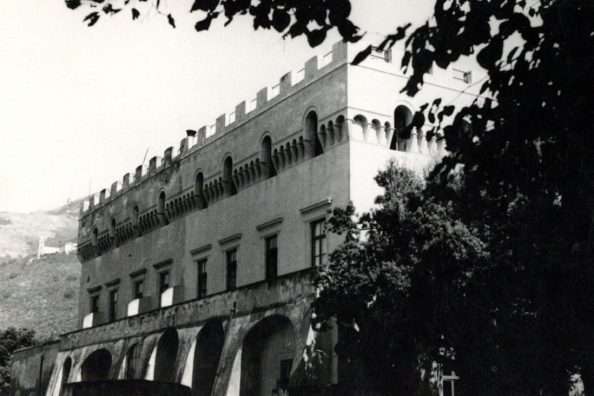
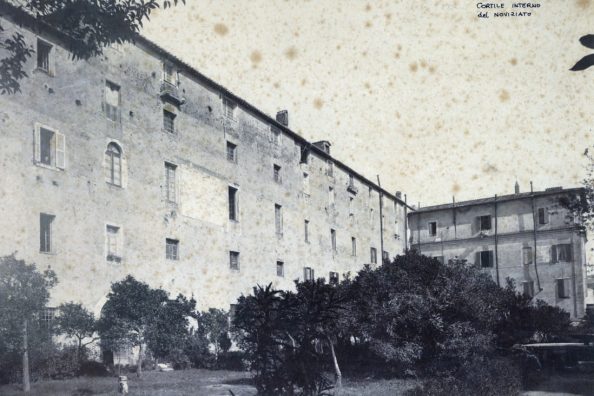
We are in Galloro and in 1939 the Jesuits decided to expand the novitiate building. The novitiate of the Roman Province had been based here since 1929. It continued to welcome novices until 1952, when it became a house of spiritual exercises.
Among the invoices, there is a very interesting one: “Estimate for the construction of new toilets in the new building”.
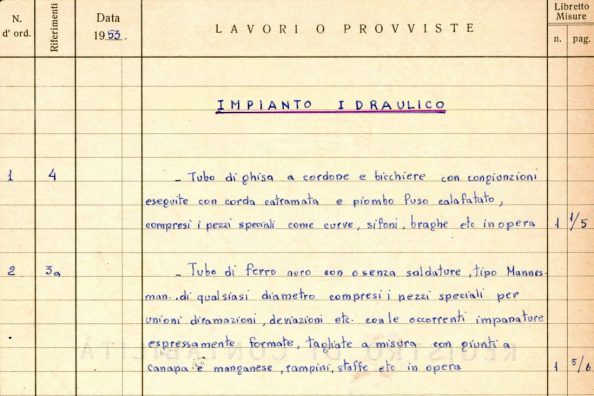
Here is what arrived at Galloro to build the bathrooms:
squat toilets,
porcelain toilets,
porcelain sinks,
chrome bottle siphons,
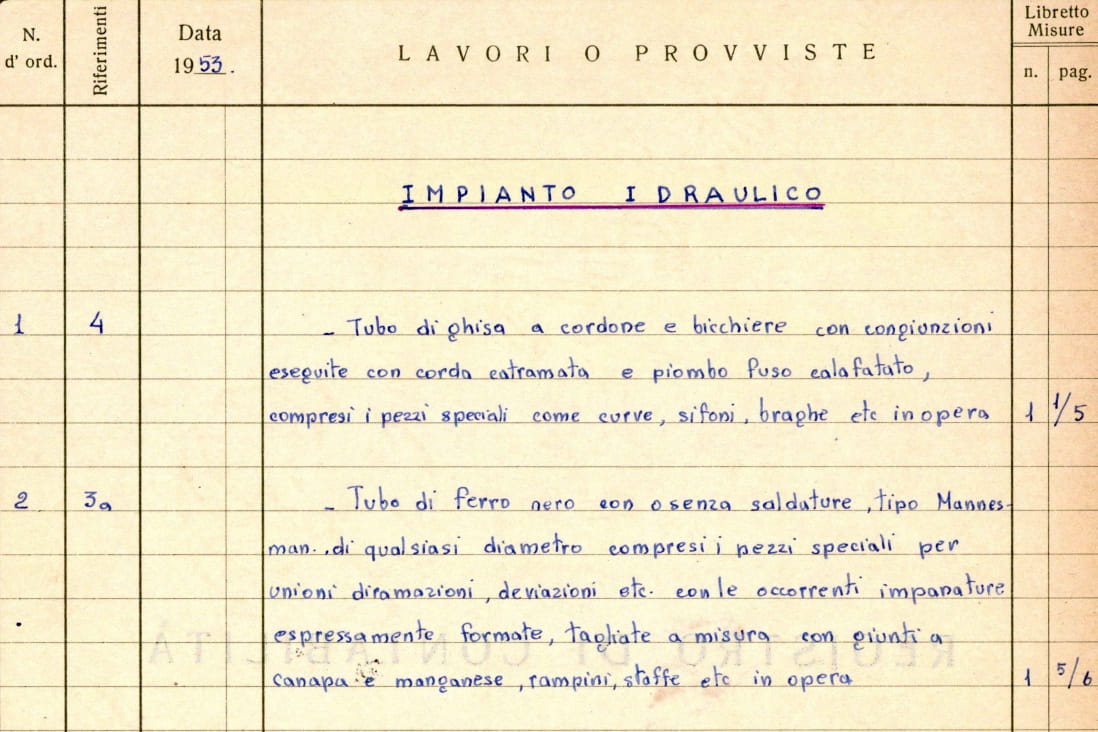
lead connectors for cast iron pipes [today the use of lead in plumbing is prohibited, but at the time it was common practice]
cast iron cisterns with supporting brackets,
cast iron pipes,
lead pipes for water outlets,
chrome-plated taps for sinks,
nickel-plated brass drains,
majolica wall coverings.
The cost of the work, including labour, amounted to 3953 lire.
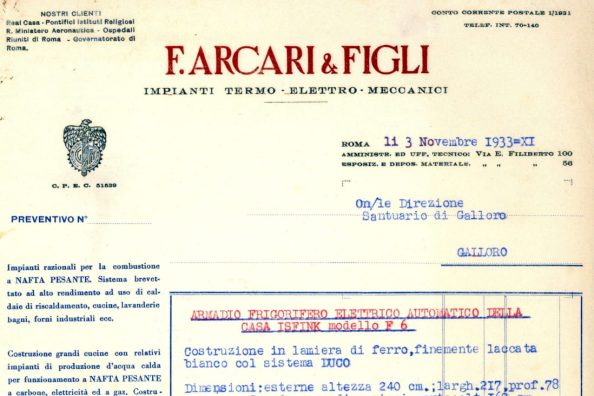
The furnishings are also a sign of the times. Attached to the estimates, we often find catalogues from furniture and kitchen suppliers.
The list of furnishings also includes televisions, refrigerators and other household appliances, which were making their debut in the community. Electricity had arrived in the residences a few decades earlier, along with the telephone.
The installation of lifts and goods lifts then made it easier for the older fathers to move around and for goods and objects to be transported between the various floors of the colleges and residences.
New problems
If today the Society has to carry out work on a historic and listed building, it must first write to the Superintendency and have the project approved, which requires a series of permits. In the case of work on churches, the FEC (Fondo Edifici di Culto, Fund for Religious Buildings) is involved in the first instance, as churches are not owned by the Society of Jesus but by the State.
However, this was not required for work carried out until 1939. In fact, the legislation that now protects the national heritage, contained in the Code of Cultural Heritage and Landscape, originated from Law No. 1089 of 1939, when the State began to protect cultural and artistic heritage.
Therefore, for buildings renovated after the Second World War, we often find the opinion of the Superintendency or documentation from the body that approved the work.
Ideas for the history of work
In other episodes, we have already indicated possible useful sources for the history of work: women’s work, trades and professions of members of congregations, the involvement of tram drivers in the apostolate, staff in colleges, and assistance to specific categories of workers.
Economic documentation provides us with a wealth of information and avenues of research for the history of work. We can, for example, find out what the cost of a day’s work was for a labourer, bricklayer, supervisor or plumber and how this figure changed over time, but also the price of individual items of furniture and all building materials.
The documents also describe different methods of construction and organisation of plumbing systems. In fact, floor plans, diagrams and drawings of various systems are often preserved, where we still find the use of materials that are now prohibited by law: lead or asbestos.
Maria Macchi