Readings in the refectory
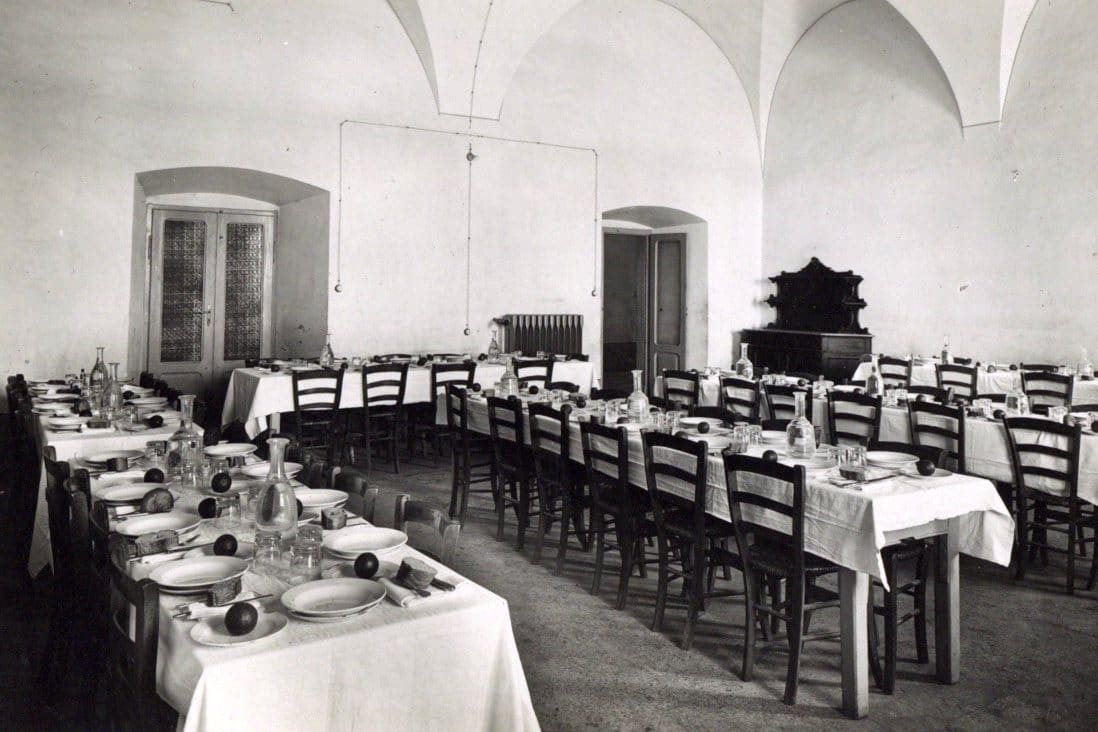
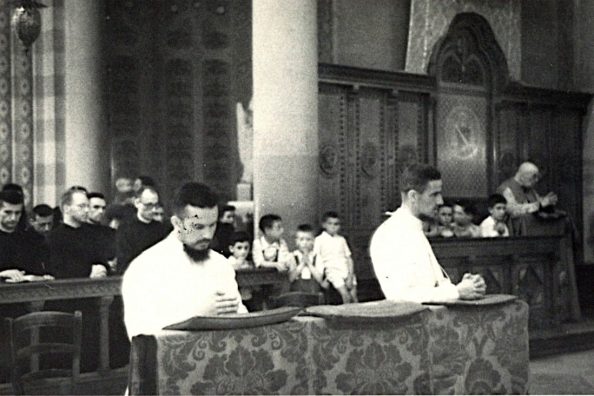
Until the Second Vatican Council, it was customary in Jesuit communities to eat in silence while a brother read aloud. How can we find out what readings and announcements the Jesuits listened to while eating their meals?
The organisation of the community
In the community, everyone had a task, and this allowed the residences, from the smallest to the largest, to function well. The brothers were active in the kitchen, the porter’s lodge, the vegetable garden and the garden, while the fathers were in the church, in the squares for preaching, and in the classrooms for lessons. Everyone also had their own “external” duties related to various works, such as colleges, prayer congregations, and the Apostleship of Prayer, but also internal duties within the house, such as the writer of the historia domus and the prefect of health. One member of the community was assigned to read during meals. Fathers and brothers listened to passages from the Bible and the Gospel, the lives of saints, but also news from the Province.
The source
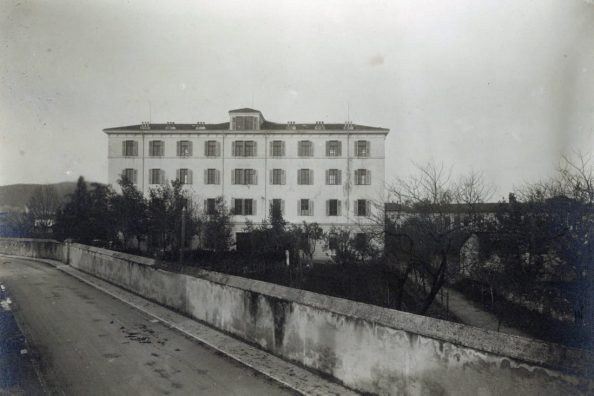
The source of this episode is preserved among the papers of the residence in Bassano del Grappa, in the file relating to the correspondence and life of the community, but these are very common documents that can also be found for many other residences, both in the 19th and early 20th centuries.
Often these are loose papers, letters, printed documents collected in files with the eloquent title: ‘to be read at table’: notices, communications from the Provincial to the whole Province, obituaries of confreres, letters from the General.
Thanks to these papers, we can now know precisely what readings were heard by the community of Bassano gathered in the refectory after praying in the chapel. Mealtimes bring the whole community together: during the day, fathers and brothers have multiple tasks that often take them out of the house for lessons, errands and apostolate. Mealtimes are therefore the best time not only to inform the brothers but also to reflect together.
Jesuits listening
Let us enter the house in Bassano del Grappa, sit virtually in the refectory, at the table where the fathers and brothers are eating, and listen to the announcements read from time to time by the Jesuit in charge.
The readings accompany meals both in times of peace and in times of war.
It is 17 October 1944 when the Provincial, Fr. Domenico Bianchini, sends a letter “to be read at table” to be close to all his confreres:
The impossibility of visiting, at least while the current situation lasts, the individual houses of the Province and the nearby Albanian Mission makes me feel even more keen to communicate with you all by letter to inform you of the main news from the Province. […] Air raids have seriously damaged the Villa San Ignazio in Trento, which is hosting our people and several friends who have been displaced from the city and the residence in Parma. […] On 13 May, the College of Brescia was hit by three or four explosive bombs that destroyed the Fathers’ building and the adjacent church of St. Mark, damaging walls, doors and windows in other parts of the College as well. […] A new raid strikes and destroys the Leone XIII, which had just been refurbished in the hope of reopening it for the upcoming school year
The war ended and the Provincial wrote again to all the superiors asking them to read a letter at the table concerning the directives for the referendum of 2 June, which would give birth to the Italian Republic.
[…] some houses have asked me for guidance regarding the institutional referendum on 2 June. I would like to inform you that, having addressed a similar question to our Curia in Rome, I was told that neither the Holy See nor the Rev. Vicar intend to recommend one institutional form over the other. Only the Reverend Assistant observes that – as far as can be predicted – the vast majority of Italian bishops will certainly not vote for the republic, which, lacking a supreme power that is independent of and superior to the parties, could more easily hold some unpleasant surprises in store if the government were to pass into the hands of some left-wing party. In any case, what matters most is that the elections on 2 June produce, as delegates of the people to the Constituent Assembly, the greatest number of honest, capable and well-intentioned men who will give Italy a fundamentally Christian Constitution that is as suited as possible to the needs of our country and our times.
Sei mesi più tardi, il 15 novembre 1946, viene data lettura di una lettera che il Provinciale ha ricevuto e che inoltra a tutta la Provincia per informarla della situazione in Albania.
On the evening of the 28th, the feast of Christ the King, at around 7 p.m., Fr. Meshkalla and the parish priest, Don Stefano Kurti, were arrested at our house in Tirana. A few days earlier, Br. Pantalia had been arrested in Shkodër. The reasons for the arrests are unknown: for the first two, it seems to be because of the club or oratory they ran. Only Fr Giadri remained in Tirana with M. [teacher, Jesuit in regency] Topalli. Brother Radovani is with Monsignor Volaj in Nenshati. Fr Troshani, having shaved his beard and removed his Eastern priest’s robe, is now assistant parish priest in Merqinje (diocese of Alessio). Fathers Karma and Tuci are in some parish, I don’t know which.
A Scutari lo scorso ottobre sono stati ordinati tre sacerdoti. Pochi giorni dopo la prima Messa uno è stato messo in carcere, gli altri due obbligati a prestare il servizio militare. A Tirana, perché durante l’imposizione delle mani i Sacerdoti tennero sospesa la destra, questo atto venne interpretato come un saluto fascista e furono quindi sottoposti a interrogatori.
This is the story of the dramatic months of persecution of religious figures, already devastated by the murder of Fr. Fausti along with the other Albanian martyrs. Other Jesuits were imprisoned during that period and sentenced to hard labour for many years before being able to return to Italy, as in the case of Fr. Gardin who was only released in 1955.
However, there is also information of a different nature, such as the notice to send news from the community to the Provincial Curia for publication in the magazine ‘I Gesuiti’, the magazine of the Veneto-Milanese Province. A long letter is read on the death of the Vicar General, Fr. Alessio Magni. Other communications concern the preparation of the annual catalogue, to which we will devote an episode in the near future, prayers for new vocations, anniversaries, and the dates of spiritual exercise courses.
Mealtimes in today’s residences
Mealtimes are one of the aspects that were the subject of the reforms of the Second Vatican Council and a symptom of changing times. Today, in fact, communities no longer listen to music during meals but eat together while conversing, and in this respect communities are no different from families. Lunch and dinner are moments of conviviality in which fathers and brothers can update each other on their days and their apostolates.
Even today, however, there are times when the community needs to be informed, and often the meal is the chosen moment: the community waits for the superior or minister to pray and bless the food they are about to eat. At this point, announcements are made: about guests at the table, about the needs of the day, about Jesuits who are about to leave the community for a new destination – this usually happens between August and September – and about newly arrived Jesuits. In these cases, a farewell and welcome ceremony is organised.
The decision to transform mealtimes into moments of conviviality seems to have contributed to making the atmosphere in the communities more familiar.
Maria Macchi